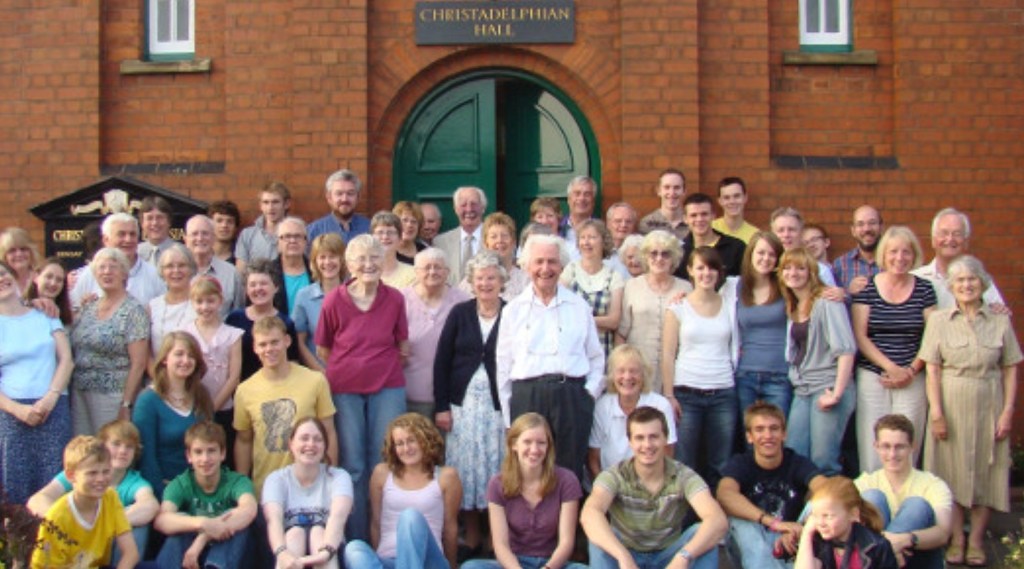
John Thomas was born on April 12, 1805, in London. Raised in a religious household by his pastor father, he later pursued studies in medicine and anatomy. In 1832, Thomas emigrated to the United States. During the voyage, his ship encountered a violent storm, and he vowed to devote his life to seeking God’s truth if he survived. Once in America, he became associated with Alexander Campbell and his Reformation Movement.
That October, Thomas was rebaptized and began traveling as an evangelist. Two years later, in 1834, he married Ellen Hunt and started editing the Apostolic Advocate magazine. His insistence on a deep scriptural understanding before baptism and his views on resurrection created friction with Campbell, leading to his disfellowship in 1837.
In the 1840s, Thomas was drawn to the millennialist ideas of William Miller, who predicted Christ’s imminent return. Incorporating these concepts into his own teachings, Thomas published Elpis Israel (“The Hope of Israel”) in 1846, setting out his key doctrines and marking the informal start of his group. His followers became known as “Thomasites” or the Royal Association of Believers. During the American Civil War, the group required an official identity to register for conscientious objector status. Thomas selected the name “Christadelphian,” meaning “Brothers in Christ.”
In the early 1860s, Thomas published Eureka: An Exposition of the Apocalypse, also known as Eureka (I Found It), a three-volume work in which he predicted Christ’s return between 1864 and 1868. When the prophecy failed, some members abandoned the Christadelphians. Thomas died on March 5, 1871, in New Jersey, and leadership passed to his close follower Robert Roberts, who launched “The Christadelphian” magazine and organized the group’s first large group gatherings.
Christadelphians hold the Bible as their sole authority. They reject the Trinity, teaching that Jesus was fully human, sharing mankind’s inclination to sin though living without it. They also deny the immortality of the soul, a personal devil, and hell as eternal torment, understanding the Holy Spirit instead as an impersonal divine power. Central to their faith is belief in the literal return of Jesus to establish God’s kingdom on Earth. They teach that salvation comes through faith, baptism by immersion, and righteous living.
Christadelphians have no official leadership structure or hierarchy. Congregations, known as “ecclesias,” are autonomous and have no paid clergy. Leadership roles are filled by elected volunteers, and meetings are often held in private homes or rented halls. Today, the Christadelphian community numbers about 50,000 members in over 130 countries.
Key Sources:
Lippy, C. H. (1989). The Christadelphians in North America.
MacGregor, L. (1995). Christadelphians & Christianity.
Tennant, H. (1986). The Christadelphians: What They Believe and Preach.
 Encyclopedia of Cults, Sects, and New Religious Movements