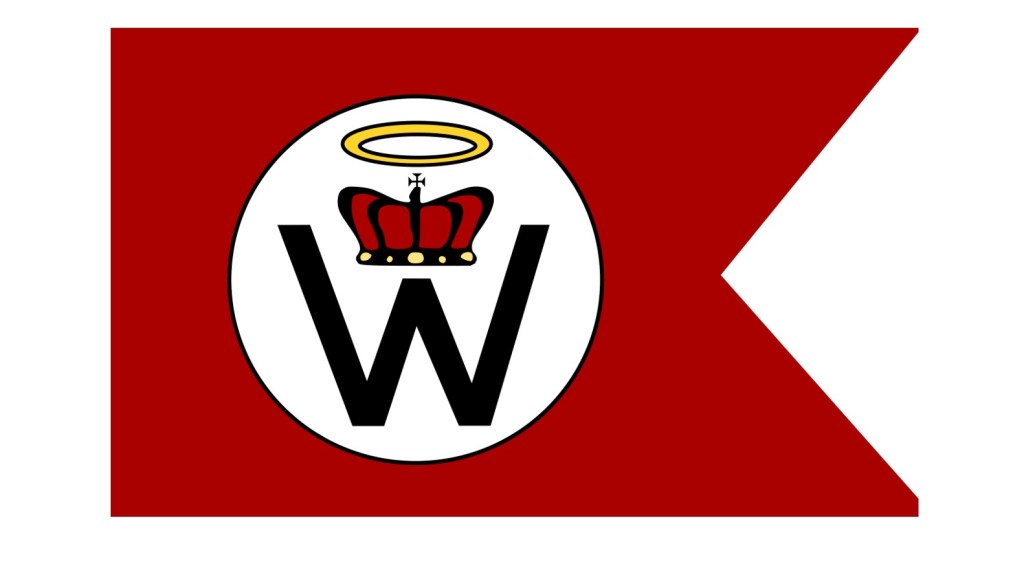
Bernhardt “Ben” Klassen founded the Church of the Creator in 1973, later changing its name to the World Church of the Creator following litigation by another unrelated sect with the same name. It is also known as part of the Creativity Alliance, a grouping of atheistic white supremacist sects that promotes white separatism, anti-Christianity, antisemitism, scientific racism, and homophobia.
Klassen was born in Ukraine in 1918 and lived in Canada before migrating to the United States. He worked as an electrical engineer and invented a wall-mounted electric can opener. Klassen served briefly as a Republican member of the Florida state legislature in the mid-1960s, running on an anti-busing and anti-government platform, and he backed Alabama Gov. George Wallace’s segregationist third-party presidential bid in 1968.
Klassen was a member of the John Birch Society but left the organization because he believed it was overly tolerant toward Jews. In November 1970, Klassen formed the Nationalist White Party, though it had limited impact, especially after he began expressing anti-Christian views.
In 1973, Klassen established the Church of the Creator with the publication of his book Nature’s Eternal Religion. Members of the movement call themselves “Creators,” a term drawn from Adolf Hitler’s Mein Kampf, which characterizes the “white race” as the “creators” or “Master Race.” Klassen regarded Hitler as a significant historical figure and viewed many aspects of Nazism positively, while rejecting its support for Positive Christianity, its prioritization of nationalism over racialism, and its anti-Slavic positions.
Nature’s Eternal Religion and Klassen’s The White Man’s Bible form the core texts of Creativity. These books critique Christianity, declare the white race “nature’s finest creation,” and outline what Klassen described as a “white racial religion.” Creativity rejects Christian teachings such as the Golden Rule and pacifism, arguing that such values lead to “racial suicide.” In their place, it advances a “Golden Rule” stating that what benefits the white race is morally right, and what harms it is morally wrong.
Creativity rejects supernatural beliefs and affirms a metaphysical naturalism in which no gods, devils, spirits, or afterlife exist. Instead, it promotes a naturalistic pantheism summarized as “everything in Nature.” The movement frames “genetic immortality” through reproduction and legacy as its primary purpose. Klassen assumed the title “Pontifex Maximus” and required adherents to recite his Sixteen Commandments and Five Fundamental Beliefs five times daily. These include the ideas that race is equivalent to religion, racial loyalty is the “greatest honor,” and racial treason the “worst crime.”
In 1982, Klassen established the movement’s headquarters in Otto, North Carolina, which included a boys’ school focused on Creativity’s teachings. The religion advocates for a concept it calls “racial holy war” (RaHoWa) against non-white groups, including Jews and Black people, whom Klassen referred to with racial slurs in his writings and instructed followers to adopt. Klassen also promoted a strict fruitarian and raw vegan diet known as “Salubrious Living,” tied to the later stages of the movement’s teachings. Although he did not consistently follow the diet himself, he presented it as an aspirational practice rather than a requirement. Membership was limited to individuals deemed “wholly or predominantly” of European ancestry.
By the early 1990s, the Church faced increasing financial and legal pressures. A significant challenge arose from an SPLC civil lawsuit connected to the 1991 murder of a Black sailor by church minister George Loeb. During this period, Klassen was dealing with his wife’s declining health, his own cancer diagnosis, and the ongoing litigation. In July 1992, he sold most of the organization’s property to William Luther Pierce, leader of the white supremacist National Alliance, at a price significantly below its estimated value. After appointing and replacing two prospective successors, Klassen named Rick McCarty as Pontifex Maximus on January 25, 1993. Klassen died by suicide on August 6, 1993, at age 75, by overdosing on sleeping pills at the Otto headquarters. Creativity does not consider suicide a sin.
After Klassen’s death, the SPLC lawsuit resulted in a March 1994 ruling that fined the Church of the Creator $1,000,000. The court determined that Klassen’s property transfer to Pierce was an act of collusion intended to prevent payment to the victim’s family. Pierce was required to surrender his profit from reselling the property. Unable to pay the remaining judgment, the Church was sued by the SPLC for dissolution, which McCarty accepted, leading to the collapse of the original organization.
In 1996, Matthew F. Hale founded a successor group initially called the New Church of the Creator, later renamed the World Church of the Creator (WCOTC), and appointed himself Pontifex Maximus. Hale expanded the movement’s activities, increasing the number of chapters and establishing a significant online presence. However, in January 2003 he was arrested and later convicted of soliciting the murder of a federal judge. His imprisonment led to the dissolution of the WCOTC and the emergence of several tiny splinter groups.
Key Sources:
Fletcher, M. A. (1999, July 6). Behind the Hate: A Racist ‘Church.’ The Washington Post.
Henry, S. (2019, March 8). Marketing hate: The Church of the Creator has sold violent racism as religion for 20 years. Now, it’s the skinheads who are buying, and some serious Head-Bashing has begun. The Los Angeles Times.
Klassen, S. (2002). A test of faith: The Ben Klassen Story.
Michael, G. (2009). Theology of hate: A History of the World Church of the Creator.
Southern Poverty Law Center. (2025, June 5). Creativity movement.
 Encyclopedia of Cults, Sects, and New Religious Movements