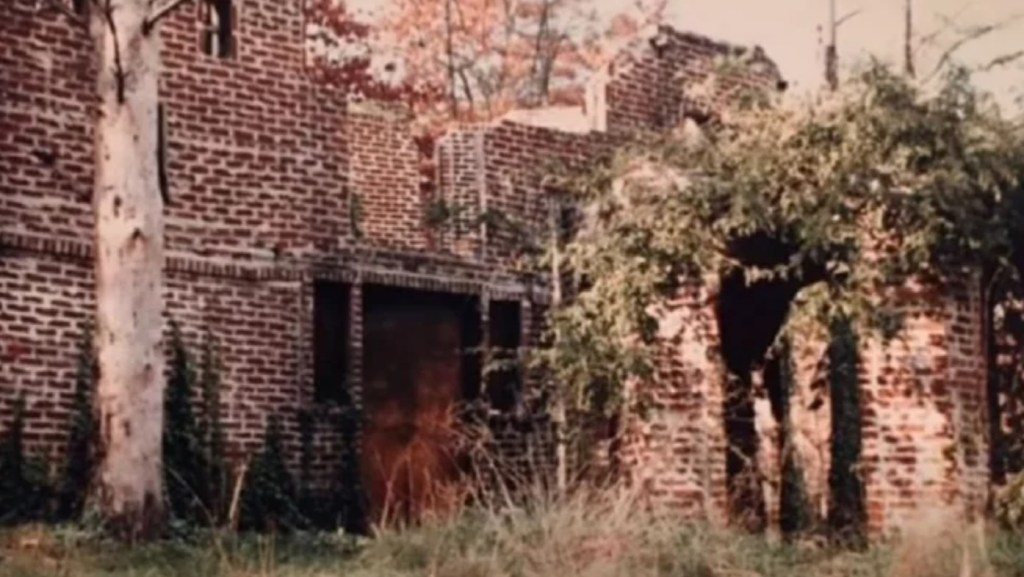
Corpsewood Manor was a secluded homestead constructed in the late 1970s on Taylor’s Ridge in Chattooga County, Georgia. The property sat on forested land accessible only by an old logging road. It later became widely known due to a double homicide that occurred there in December 1982.
Charles Lee Scudder was born in 1926 and pursued a career in science and higher education. He earned a PhD in pharmacology from Loyola University of Chicago. He later became an associate professor in the Department of Pharmacology and Experimental Therapeutics and served as associate director of the Institute for Mind, Drugs, and Behavior.
During his academic career, Scudder conducted experiments involving psychoactive substances and published research related to pharmacology and behavior. Colleagues and mentors noted that he combined professional rigor with unconventional personal interests. He also expressed a belief in the unity of the universe, which informed both his scientific and philosophical outlook.
Outside academia, Scudder maintained strong interests in music, art, and philosophy. He was an accomplished harpist and had been invited to perform with the Chicago Symphony Orchestra. He also collected art and furnishings, particularly salvaged pieces from Chicago theaters.
In the early 1950s, Scudder married Bourtai Bunting, the daughter of British poet Basil Bunting. The couple had four sons before separating several years later. By the 1960s and early 1970s, Scudder was living in a large mansion on Chicago’s West Side, filled with theater décor, antiques, and artwork.
During this period, Joey Odom entered Scudder’s life. Odom had left school after the fifth grade and initially worked as Scudder’s housekeeper and cook. Over time, their relationship developed into a long-term domestic and personal partnership.
By the mid-1970s, Scudder had become dissatisfied with academic administration and urban life. Seeking isolation and self-sufficiency, he and Odom began searching for rural land. In 1976, using a modest inheritance, they purchased forty acres in the foothills of the Appalachian Mountains in northwest Georgia.
The property lacked electricity, running water, and telephone service. These conditions aligned with their plan to live independently of public utilities. Scudder resigned from Loyola University on his 50th birthday in December 1976.
That winter, Scudder and Odom relocated to Georgia. They initially lived in a camper while constructing their home by hand. They named the property “Corpsewood Manor,” referencing the appearance of the surrounding leafless trees during the winter season.
Over the next two years, the couple laid approximately 45,000 bricks using hand tools. The walls were built thick, with internal air gaps to provide insulation. Construction relied on salvaged materials and did not involve modern machinery.
The completed manor was a two-story brick structure incorporating medieval and gothic design elements. These included rounded walls, turrets, stained glass, and decorative gargoyles. The house had no electricity and relied on lanterns, candles, and a wood-burning stove for lighting and heat.
Water was drawn from a deep well, and sanitation was handled through a chemical toilet. Behind the house, Scudder and Odom cultivated gardens, an orchard, and a small vineyard. Grapes from the vineyard were used to produce homemade wine. In addition to the main residence, several outbuildings were constructed. These included a gazebo, a well house, and a three-story chicken coop. The first two levels of the coop were used for poultry and storage.
The third floor of the chicken coop was painted pink and later became known as the “Pink Room.” It was used to entertain guests and contained mattresses, candles, and other personal items. Scudder and Odom did not practice monogamy and occasionally invited visitors from nearby communities to socialize at the property.
Scudder identified as an atheist and was a member of the Church of Satan. Scudder’s membership reflected philosophical alignment rather than ritual practice, though his interest in occult symbolism was visible throughout Corpsewood Manor. Decorative elements included stained glass depictions of Baphomet, statues of Mephistopheles, pentacles, and a collection of esoteric literature.
Despite their lifestyle and openness as a same-sex couple, Scudder and Odom generally maintained cordial relationships with neighbors and local hunters. They often granted permission for others to cross their land. Among those who encountered them was Kenneth Avery Brock, a teenager who came onto the property while deer hunting.
Brock visited Corpsewood Manor on multiple occasions. He later told acquaintances stories that exaggerated the couple’s wealth and emphasized their nonconformist beliefs. These accounts contributed to false assumptions about the property.
By late 1982, Brock was living with Samuel Tony West, a 30-year-old with a documented history of violent crime. Brock told West that the men at Corpsewood Manor were wealthy and kept money hidden in their home. Based on these claims, Brock and West devised a plan to rob Scudder and Odom. They believed the property’s isolation would allow them to commit the crime without detection.
On the night of December 12, 1982, Brock and West drove to Corpsewood Manor with two other teenagers, Joey Wells and Teresa Hudgins. They brought a .22-caliber rifle. Prior to arriving, they had been inhaling a substance known as “toot-a-loo,” made from paint thinner and other chemicals. Scudder welcomed the group and invited them into the Pink Room. Wine was shared among those present. After several hours, Brock left the group, retrieved the rifle, and returned.
Brock shot Joseph Odom multiple times inside the manor. He then killed the couple’s two English mastiffs. Scudder was restrained and questioned about money, but stated that his funds were kept in a bank rather than in the house. After failing to locate valuables, West shot Scudder at close range. The group fled the scene in Scudder’s Jeep after unsuccessfully attempting to remove a large harp from the house.
The murders were discovered several days later when a neighbor noticed bullet holes and contacted authorities. Hudgins later provided information that initiated a statewide and national manhunt. Brock and West fled westward. They abandoned the Jeep in Mississippi and killed a U.S. Navy lieutenant during a carjacking. The two men later separated.
Brock surrendered to authorities in Georgia on December 20, 1982. West turned himself in days later in Tennessee. Both men were tried, convicted, and sentenced to life in prison. During the trial, the defense emphasized allegations regarding Scudder’s sexuality and supposed drug use. These claims were not supported by forensic evidence. Testing found no LSD in the wine, and testimony demonstrated that the robbery had been planned in advance. Wells and Hudgins were not charged. Investigators cataloged items found at Corpsewood Manor, including human skulls used for academic purposes, occult objects, books, and artwork.
Media coverage frequently highlighted these elements. This contributed to the case’s association with the broader “Satanic Panic” of the early 1980s. Friends and colleagues of Scudder described him as dependable and intellectually engaged.
A small private funeral was held at Corpsewood Manor. Odom’s ashes were scattered on the property. Scudder’s ashes were returned to Wisconsin for burial. Legal disputes over the estate followed, and the property was later sold. A fire eventually destroyed most of the remaining wooden structures, leaving primarily brick remnants.
Key Sources:
Ellis, D. (2016). Corpsewood: A True Crime Like No Other.
Gregson, B. L. (2024, October 21). The Corpsewood Manor Murders. Oxford American.
Harman, B T. (2022, October 27). The Corpsewood Murders: 40 years later. Atlanta Magazine.
Kent, L. (2022, October 10). Corpsewood Manor. Abandoned Southeast.
Petulla, A. (2016). The Corpsewood Manor murders in North Georgia. Arcadia Publishing.
 Encyclopedia of Cults, Sects, and New Religious Movements