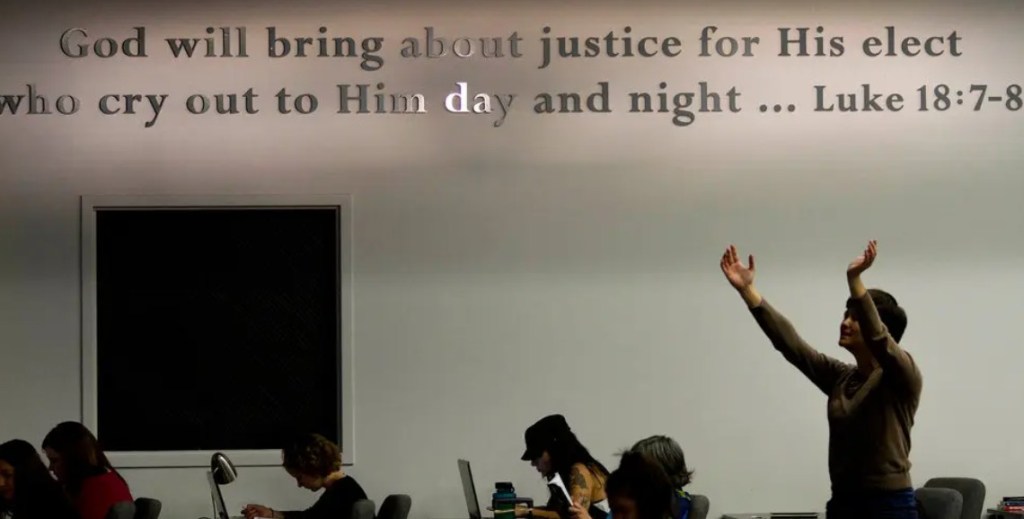
Tyler Deaton rose to prominence as a religious leader whose prayer group later became the subject of a major criminal investigation in Kansas City, Missouri. He was born and raised in Texas and attended Calallen High School in Corpus Christi.
Deaton enrolled at Southwestern University, a liberal arts college in Georgetown, Texas. While there, he quickly became a visible religious figure on campus. Dissatisfied with existing campus ministries, he formed an unofficial prayer group that emphasized extended prayer sessions, musical worship, and strict biblical interpretation. Former classmates described him as articulate and persuasive, with a strong command of scripture and a powerful singing voice.
Over time, Deaton’s leadership style became more centralized. He began identifying himself as an “End Times apostle” with supernatural abilities, drawing from the theology of the New Apostolic Reformation. The group focused on apocalyptic beliefs, practiced “holy laughter,” and attempted faith-based healing. In 2008, members interpreted the death of a student they viewed as a spiritual opponent as the result of their prayers. Deaton also pressured followers to sever ties with other campus organizations.
A key part of Deaton’s public narrative involved his struggle with homosexuality. He stated that he had overcome same-sex attraction through religious faith and described his later heterosexual identity as a spiritual achievement. After graduating in 2009, Deaton and approximately ten followers relocated to Grandview, Missouri, to join the International House of Prayer Kansas City (IHOPKC), an evangelical ministry known for continuous prayer and end-times teachings.
In Missouri, Deaton established a communal living arrangement that neighbors described as closed-off and insular. Although framed as missionary training, the household operated under Deaton’s authority. He controlled finances, diets, and social interactions, and discouraged contact with family members. Former members later described internal disciplinary practices, including shunning and enforced isolation for those who questioned leadership.
Despite his public statements regarding sexuality, Deaton allegedly engaged in secret sexual relationships with male members of the household, describing the encounters as religious in nature. During this period, he also pursued a relationship with Bethany Leidlein, a longtime follower. The relationship was tightly regulated, with physical contact prohibited until their engagement in early 2012. They married in August 2012.
Shortly after the marriage, the relationship deteriorated. Bethany reportedly experienced depression and emotional withdrawal and spent time living in a separate women’s communal house to distance herself from Deaton’s control. One week before her death, Deaton intervened when she attempted to ingest windshield wiper fluid. She was hospitalized briefly for suicidal ideation and released days later.
On October 30, 2012, Bethany Deaton was found dead in a van at Longview Lake. The scene appeared consistent with suicide. She was found with a plastic bag over her head, empty pill bottles, and a handwritten note referring to despair and a “terrible choice” made long ago.
Less than two weeks later, prayer group member Micah Moore entered a police station and confessed to murdering Bethany. Moore claimed he acted on Deaton’s instructions, stating the group feared Bethany would disclose sexual abuse to her therapist. He alleged that Deaton and other men had drugged and assaulted her as part of religious rituals. Based on the confession, Moore was charged with first-degree murder, and Deaton became a primary person of interest.
As the investigation continued, significant inconsistencies emerged. Moore’s confession followed an intense “exorcism” session conducted by IHOPKC leaders, during which he was told he was demonically possessed and responsible for the group’s spiritual problems. Moore, who had a documented history of psychiatric struggles, later appeared to be in a state of psychological distress. His confession included multiple factual errors.
Forensic evidence ultimately contradicted the confession. Handwriting analysis by the FBI confirmed that Bethany wrote the suicide note. Toxicology reports showed no traces of the antipsychotic drugs Moore claimed were used. Surveillance footage and financial records placed Bethany alive at times when Moore said she had already been killed. DNA testing did not link Moore to the scene.
In 2014, the Jackson County Prosecutor’s Office dismissed all charges against Moore, citing insufficient evidence and the unreliability of the confession. The medical examiner, who had previously changed the manner of death to “undetermined,” reverted to suicide as the conclusion. Prosecutors stated that while the group environment was controlling and unconventional, there was no evidence of criminal conduct related to Bethany’s death.
After the case concluded, the prayer group dissolved. Deaton kept a low public profile and later sought work as a teacher in Texas, though he was placed on leave after his past became publicly known. IHOPKC faced additional scrutiny in later years, particularly regarding leadership practices under founder Mike Bickle and allegations of mishandled abuse within the organization.
Key Sources:
The Daily Mail. (2015, February 21). “I can affect people:” Leader of alleged cult laughs and denies killing his wife as her case remains a mystery more than two years after she was found dead in a minivan in what appeared to be a suicide.
Goode, E. (2012, December 6). Disputed Murder Confession Casts a Spotlight on a Missouri Sect. The New York Times.
Robertson, J. (2012, November 19). Secrets of Tyler Deaton’s prayer group emerge. The Kansas City Star.
Ross, W. (2012, November 30). A confession to murder — quickly withdrawn — rocks religious community. The Daily Beast.
Tietz, J. (2023, October 6). Love and death in the House of Prayer. Rolling Stone.
 Encyclopedia of Cults, Sects, and New Religious Movements