Michael Roach was born in Los Angeles in 1952. He attended Princeton University, and during his college years, his academic path was interrupted by personal events, including the deaths of his parents and the suicide of a brother. Around this time, he became increasingly involved in Eastern spirituality. In 1983, he was ordained as a monk in the Gelugpa school of Tibetan Buddhism.
Under the guidance of his teacher Sermey Khensur Lobsang Tharchin, Roach pursued the Geshe degree at Sera Mey Monastery in India, a course of study that traditionally requires about twenty years. In 1995, he became the first American to receive the degree.
While continuing his monastic studies, Roach entered the diamond business at his teacher’s suggestion, with the aim of applying Buddhist ethics in a corporate setting. He helped build Andin International, a New York-based jewelry manufacturer, from a startup into a company with annual turnover exceeding $100 million. For 17 years, he commuted to Manhattan as a corporate executive while residing at a monastery in New Jersey. Roach described his business career as a “metaphor” for spiritual work and used earnings to support projects including the Asian Classics Input Project and Sera Mey Monastery.
In 1996, Roach began what he called a “spiritual partnership” with student Christie McNally. The relationship developed alongside his teaching activities and departed from conventional monastic practice. The two vowed to never be more than 15 feet apart and often ate from the same plate. Although Roach remained a monk under vows of celibacy, he and McNally were secretly married in a Christian ceremony in Rhode Island in 1998. The marriage became public in 2003 and drew criticism from parts of the global Buddhist community.
From 2000 to 2003, Roach led a three-year silent retreat in the Arizona desert, joined by McNally and four other students. During this period, he stated that he had attained direct realizations of emptiness and entered the path of a bodhisattva. He also declared that McNally was an incarnation of the deity Vajrayogini and gave her the title of “lama,” despite her not having completed traditional scholarly training. Following the public disclosure of his marriage and these statements, high-ranking Buddhist figures, including the Office of the Dalai Lama, said his conduct did not accord with traditional teachings.
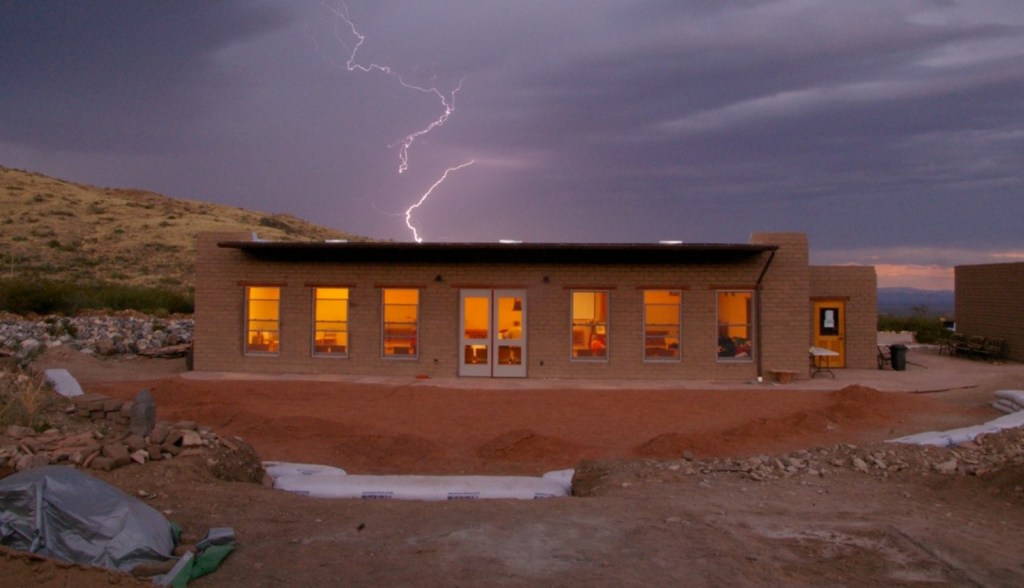
Diamond Mountain University was established in 2004 on a 1,000-acre site south of Bowie, Arizona. The center promoted a form of Buddhism that incorporated elements of yoga, Hindu tantra and business ethics, and taught that spiritual practice could be connected to financial success. Former members and critics described the internal culture as centered on strong reverence for the lama. Some participants reported secret tantric initiations and rituals involving the consumption of “nectar” (alcohol) and symbolic substances, which they said encouraged heightened emotional states and belief in extraordinary events.
Allegations also emerged regarding conduct during empowerment rituals. In 2005, former board member Sid Johnson described an initiation in which he was blindfolded and massaged by McNally in a yurt while Roach was present. Reports circulated that members of the inner circle attributed miraculous abilities to Roach and McNally, including claims that they could walk through walls. Such accounts led some observers to characterize the organization as a “sex cult” or a “lifestyle religion.”
In 2009, Roach and McNally ended their relationship. In 2010, McNally married Ian Thorson, a longtime student associated with the group. That December, Diamond Mountain began another three-year silent retreat with forty students, appointing McNally as the guiding teacher and retreat director.
During the retreat, reports surfaced of instability and violence. In early 2011, Thorson sought medical treatment for three deep stab wounds to his torso. At the time, he and McNally did not publicly explain the injuries. In February 2012, McNally broke her silence during a lecture and said she had stabbed Thorson with a knife they had received as a wedding gift. She described the incident as “divine play” and an effort to “raise up aggressive energy,” linking it to tantric teachings associated with the goddess Kali.
Following reports of the stabbing and additional allegations of violence, the Diamond Mountain board initiated an inquiry. The board asked McNally and Thorson to leave the property for at least one year and provided funds for travel. Instead of departing the area, the couple relocated to a remote cave on public land within the retreat boundaries. A small group of supporters supplied them with provisions without informing Diamond Mountain administrators or Roach.
In April 2012, McNally placed a distressed cell phone call requesting help. Rescuers found Thorson dead in the cave and McNally suffering from dehydration and exposure. Authorities determined that Thorson died of dehydration. An investigation was conducted, and no foul play by Diamond Mountain leadership was suspected.
The incident intensified scrutiny of Roach’s teachings. Critics said the group lacked the structure and grounding of traditional Buddhism and had become centered on a single personality. The organization also faced criticism for its karmic teachings, which held that suffering, including illness and violence, results from one’s own past negative actions. Critics argued that this framework could function as a mechanism of psychological control.
Despite the controversies and Thorson’s death, Roach continued to work internationally as a business consultant and spiritual teacher. He has said that following “divine instructions” takes precedence over public opinion.
Key Sources:
Burleigh, N. (2013, June 6). Sex and Death on the Road to Nirvana. Rolling Stone.
Carney, S. (2015). A Death on Diamond Mountain: A True Story of Obsession, Madness, and the Path to Enlightenment. Gotham.
Carney, S. (2015, June 1). Obsession and madness on the path to enlightenment. Tricycle: The Buddhist Review.
Hachard, T. (2015, March 18). How Self-Improvement became Self-Destruction on “Diamond Mountain.” NPR.
Santos, F. (2012, June 5). Mysterious Buddhist Retreat in the Desert Ends in a Grisly Death. The New York Times.
 Encyclopedia of Cults, Sects, and New Religious Movements