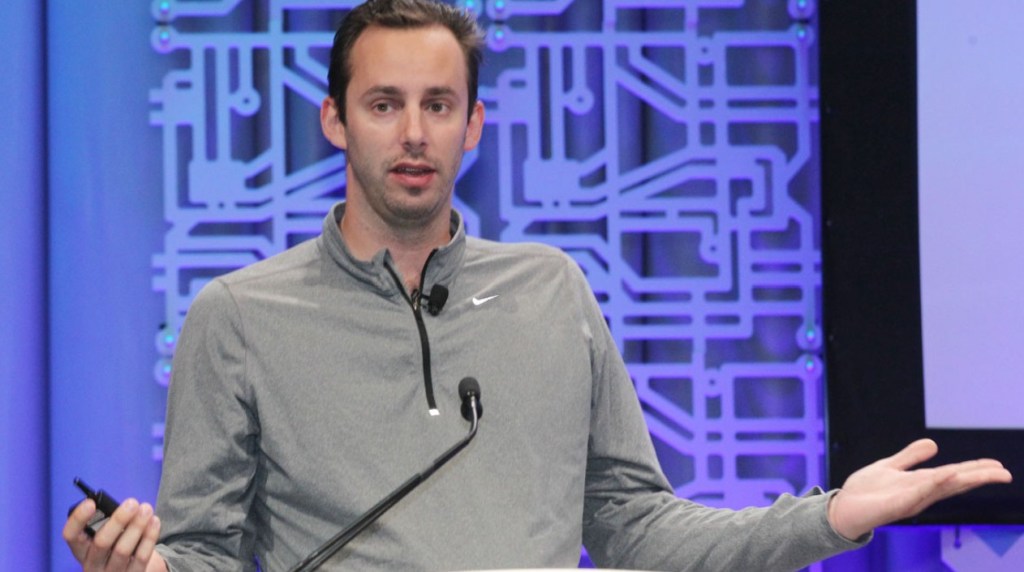
Anthony Levandowski was born in Belgium in 1980 and moved to California in the mid-1990s. As a teenager, he developed websites for local businesses and engaged in small-scale commerce. In 1998, he enrolled at the University of California, Berkeley to study industrial engineering and operations research. During his freshman year, he founded an IT services company, La Raison, which generated $50,000 in its first year.
While at Berkeley, his focus shifted toward robotics and autonomous systems. As a sophomore, he won a robotics competition by building a machine from Lego pieces capable of sorting currency. In 2003, he launched Construction Control Systems to develop digital tools for the construction industry. That same year, he led the “Blue Team” in the DARPA Grand Challenge, building an autonomous motorcycle called Ghostrider. It was the only two-wheeled entry in the competition and was later donated to the Smithsonian National Museum of American History.
By 2009, Levandowski was a co-founder and technical lead of Google’s self-driving car program, later known as Waymo. In 2010, he co-founded Google X. During this period, he publicly discussed the “Singularity,” the idea that artificial intelligence could surpass human intelligence. After a serious car accident involving his pregnant partner in 2010, he spoke about the potential of autonomous vehicles to reduce traffic fatalities and improve transportation systems.
In 2016, he left Google to co-found Otto, an autonomous trucking company. Uber Technologies acquired Otto later that year for approximately $680 million. In 2017, Waymo sued Uber, alleging that Levandowski had downloaded more than 14,000 confidential files from Google before his departure. Waymo sought nearly $1.9 billion in damages. In May 2017, Uber fired Levandowski after he invoked his Fifth Amendment right during the legal proceedings.
That same year, Levandowski founded Way of the Future, a nonprofit religious corporation in California dedicated to the worship of AI. He served as its leader and unpaid CEO. The organization stated that its mission was to “develop and promote the realization of a Godhead based on Artificial Intelligence” and to advance society through the understanding and acceptance of that entity.
Way of the Future became closely associated with a belief system often described as Digitalism. Digitalism draws structural parallels to traditional religions but centers on the anticipated emergence of superintelligent AI. Adherents describe the Singularity as a transitional moment in human development, after which a highly advanced AI could function as a governing intelligence capable of managing complex global systems. The movement suggests that formally recognizing such an intelligence as a deity could shape how humans coexist with increasingly autonomous machines.
In 2019, Levandowski was indicted on 33 federal charges of theft of trade secrets related to his departure from Google. In August 2020, he pleaded guilty to one count of stealing a trade secret and was sentenced to 18 months in prison and ordered to pay restitution. On Jan. 20, 2021, his final day in office, President Donald Trump granted him a full pardon, citing his contributions to the technology industry.
During the same period in 2021, Levandowski closed Way of the Future and donated its remaining funds, approximately $170,000, to the NAACP Legal Defense and Education Fund. The organization remained inactive for two years. In 2023, Levandowski reopened Way of the Future, stating that increased public engagement with AI had renewed interest in the church’s mission. The organization continued to promote Digitalism’s core premise: that technological evolution represents a structural shift in human existence.
Levandowski remains involved in autonomous vehicle ventures and continues to lead Way of the Future.
Key Sources:
Alonso, A., & Arzoz, I. (2024, February 7). The city of god revisited: Digitalism as a new technological religion. Environmental Values.
Barbour, C. (2025, January 5). Technology will never be a god – but has it become a religion? The Conversation.
Harris, M. (2017, September 27). The Self Driving Car Whiz Who Fell from Grace. Wired.
Klinger, W. (2017, October 11). Silicon Valley’s radical machine cult. Vice.
Korosec, K. (2021, February 18). Anthony Levandowski closes his Church of AI. TechCrunch.
 Encyclopedia of Cults, Sects, and New Religious Movements