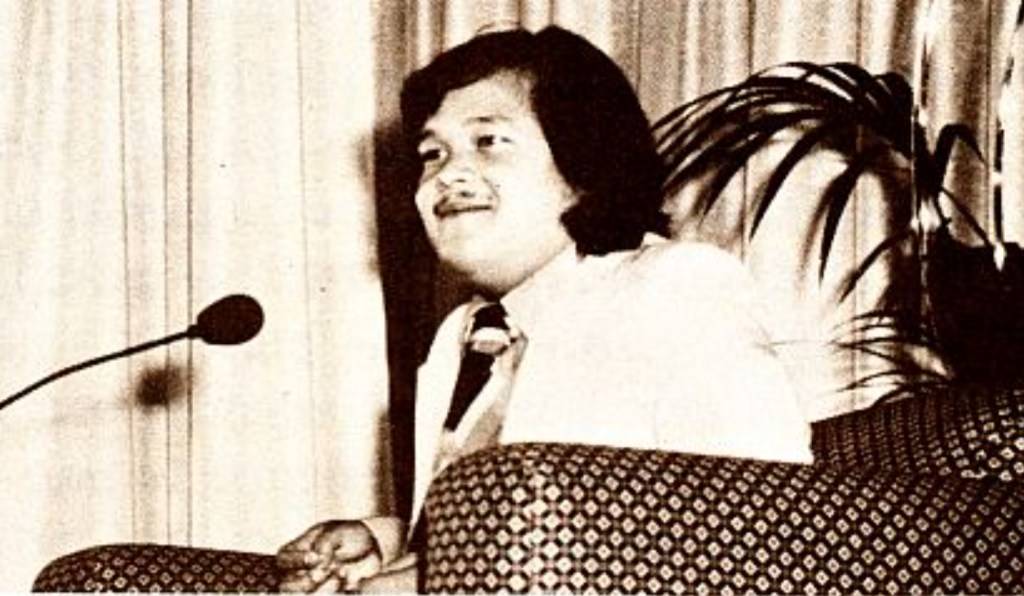
The Divine Light Mission, known in India as Divya Sandesh Parishad, was established in 1960 by Shri Hans Maharaj Ji. Born in 1900, Shri Hans was initiated into the Sant Mat tradition by the guru Sarupanand Ji. Sant Mat is a mystical movement that combines elements of Hinduism and Sikhism and emphasizes direct spiritual experience.
Shri Hans began his ministry in the 1930s. During this period he taught that spiritual fulfillment could only be achieved through the direct experience of God using specific meditation techniques. Over the following decades he built a following in northern India.
In 1960, he formally organized his growing community of devotees into the Divine Light Mission. The organization developed its headquarters in Delhi, where facilities were constructed that included marble architecture and extensive furnishings. By the time of Shri Hans’s death in July 1966, the Mission reported a membership of approximately six million people in India.
After his death, leadership of the movement passed to his youngest son, Prem Rawat. Although several older sons were present, Rawat was selected as the successor at the age of eight. He was recognized as the “Perfect Master” or “Satguru” and was widely referred to as Guru Maharaj Ji.
During Rawat’s early years as leader, administrative authority largely remained with other family members. His mother, Mata Ji, and his elder brothers managed many of the organization’s practical and administrative affairs while the young leader served as the central spiritual figure.
In the late 1960s the Divine Light Mission began attracting Western visitors, particularly individuals connected with the American counterculture. Many traveled to India seeking alternatives to Western materialism and established religions. These visitors were introduced to a practice known as “the Knowledge.” This consisted of four meditation techniques that formed the core of the Mission’s teachings. The techniques included meditation on “Divine Light,” listening to “Divine Sound,” breath meditation, and a practice described as “tasting the Divine Nectar,” which involved manipulation of the tongue.
In 1971, when he was 13 years old, Prem Rawat traveled to the West. He established the international headquarters of the Mission in Denver, Colorado. Following this move, the organization expanded across North America, Europe, and Australia, attracting a large number of young followers who were interested in spiritual experience and ideas about personal and global transformation.
Members of the movement became known as “premies.” Many lived in communal ashrams, which were intentional spiritual communities organized around service to the guru. Life in these communities often included celibacy and collective work in support of the organization. Premies frequently donated their income and labor to the Mission. Many devoted significant time to attending festivals and gatherings, sometimes participating in as many as ten events each year. Festivals such as Hans Jayanti became major gatherings for followers.
During the early 1970s the movement attracted increasing public attention. Media coverage frequently focused on the contrast between the lifestyle of the leader and the sacrifices made by followers. In 1972, Prem Rawat was accused by Indian authorities of attempting to smuggle approximately $65,000 in cash and jewelry into the country. The charges were later dropped, but the case received significant publicity.
Another incident occurred in 1973 during a public appearance in Detroit. A reporter named Pat Halley struck Rawat in the face with a shaving cream pie as a form of protest. Soon afterward, Halley was beaten by two followers of the Mission, and the episode attracted negative media coverage.
Later that year the Divine Light Mission organized a major event known as “Millennium ‘73.” The three-day festival took place in November 1973 at the Houston Astrodome. Organizers promoted it as a historic gathering that would attract more than 100,000 people and mark the beginning of a new era of world peace. Attendance was significantly lower than expected. Police estimates placed the number of participants at approximately 10,000. The event resulted in a financial loss for the organization, leaving the Mission with a debt of more than $600,000.
A major internal conflict emerged the following year. In May 1974, Prem Rawat married Marolyn Johnson, a 24-year-old American follower. After the marriage she was given the name “Durga Ji.” The marriage took place without the approval of Rawat’s mother, Mata Ji. This decision created a lasting division within the family leadership of the movement. Mata Ji publicly criticized her son and described him as having broken his spiritual discipline.
She attempted to replace him as leader with his eldest brother, Satpal Maharaj. A legal dispute followed over the control of the organization. The outcome resulted in Satpal Maharaj taking control of the Indian branch of the Divine Light Mission, while Prem Rawat retained leadership of the Western branches.
The division contributed to a decline in communal ashram life. Many followers left the ashrams during this period, and the movement increasingly shifted toward a broader and less centralized network of supporters.
During the late 1970s and early 1980s, Prem Rawat introduced several changes to the public presentation of the movement. He began to reduce the emphasis on Indian religious symbolism that had characterized its earlier years. Followers were encouraged to leave the ashrams, and many of the Indian teachers known as “mahatmas” were replaced with Western instructors. Rawat also changed his public appearance, wearing business suits rather than traditional white Indian clothing.
In 1983 he ordered the closing of all ashrams and formally dissolved the Divine Light Mission in the United States. The organization was replaced by a new entity called Elan Vital, which was presented as a secular educational non-profit organization rather than a religious church. Around the same time, Rawat also changed his title from Guru Maharaj Ji to “Maharaji.” These changes were intended to frame his message in terms of personal peace and individual development.
Despite these changes, the movement continued to receive criticism from former members and organizations associated with the counter-cult movement. Critics often focused on the organization’s methods of fundraising and its internal structure. Some former premies stated that their financial contributions had supported the personal lifestyle of the leader. Others questioned why an organization dedicated to peace and spiritual knowledge carried out relatively little humanitarian work in the communities where it operated.
In later decades Prem Rawat’s activities were conducted through newer organizations. These included The Prem Rawat Foundation (TPRF) and Words of Peace Global (WOPG). These organizations focus on humanitarian programs and on distributing Rawat’s teachings through media formats such as video and audio recordings.
Key Sources:
Abdollah, T. (2003, May 1). Guru Offers Message to Attentive Audience. The Daily Californian.
Downton, J. V. (1979). Sacred journeys: The Conversion of Young Americans to Divine Light Mission.
Finch, M. (2009). Without the Guru: How I Took My Life Back After Thirty Years. Booksurge Publishing.
Foss, D. A., & Larkin, R. W. (1978). Worshipping the Absurd: The Negation of Social Causality among the Followers of Guru Maharaj Ji. Sociological Analysis.
Price, M. (1979). The Divine Light Mission as a social organization. Sociological Review.
Ricard, M. (2003, April 30). Campus Speaker Criticized by Ex-Devotees. The Daily Californian.
 Encyclopedia of Cults, Sects, and New Religious Movements