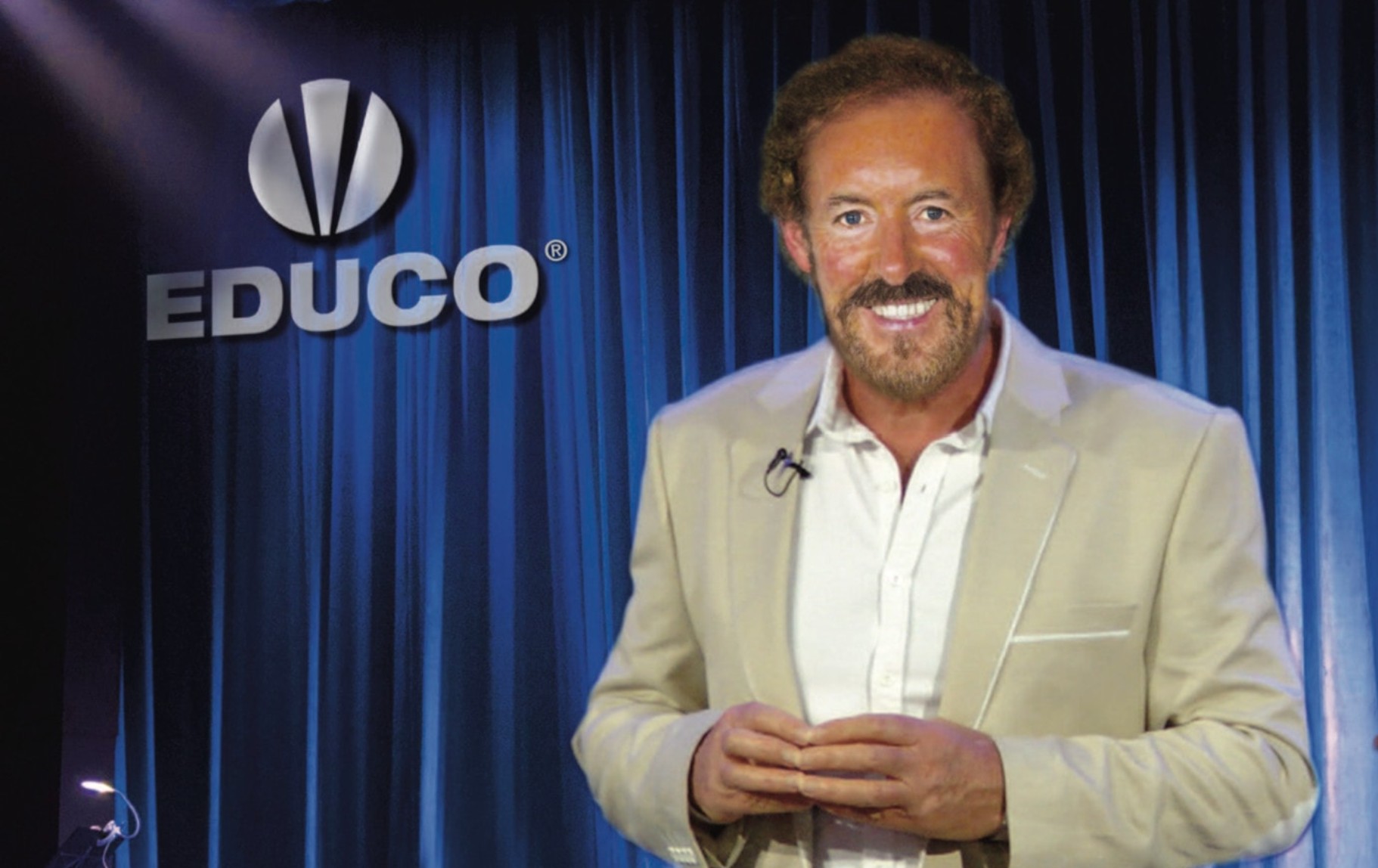
Tony Quinn was born in Dublin in 1946 and initially worked as a salesman and apprentice butcher before moving into yoga and hypnotherapy. By the early 1970s, he had established communal living arrangements in Templeogue and Howth, where followers lived under his direction. During this period, early controversy emerged as Quinn claimed he could treat serious illnesses, including cancer, leading to disputes with the press and questions about medical regulation.
Out of this early phase, Quinn developed the philosophical framework that later became known as “Educo.” The model centers on the concept of “Unconscious Attention,” which proposes that individuals use only a small portion of their mental capacity — initially described as 10%, and later as between 1% and 3%. According to the model, this unused potential can be accessed through specific forms of mental training to achieve personal and financial goals. The methods include guided meditation, visualization, and the idea of “photographing” desired outcomes in the mind.
Public attention to Quinn’s methods increased in 1995, when he worked with boxer Steve Collins as a mind trainer. The association was brief and later described by Collins as a strategy to influence public perception. Despite its short duration, the collaboration contributed to wider awareness of Quinn’s approach.
As Educo expanded, it developed into a commercial enterprise centered on high-cost seminars. These events were often held in locations such as the Bahamas, Egypt, and the French Riviera. A ten-day course was typically priced at around $20,000, while more advanced “Mind Masters” sessions could reach $50,000. Critics focused on the pricing structure and recruitment practices, noting that participants were encouraged to bring in new members in exchange for commissions. Reports also indicated that some attendees were advised to take out loans or remortgage property to pay for the programs, with the expectation that the costs would be recovered through improved outcomes.
At the same time, accounts from former members and observers described internal dynamics that raised concerns. Early communal groups reportedly included beliefs that followers were reincarnations of religious figures, such as Saint Joseph or the Virgin Mary, while Quinn himself was viewed by some as a messianic figure or the reincarnation of Jesus Christ. Testimonies from individuals within the group described activities involving physical strain, such as extended periods of movement or exercises intended to produce sensory experiences, including seeing lights at sea.
The influence of Educo extended beyond individual participants into workplace settings. In some cases, companies required employees to attend training programs based on Educo principles. In 2012, staff at a betting firm reported distress after being required to participate in sessions led by Quinn’s associates. These sessions framed emotions such as suspicion or anger as indicators of reduced mental functioning, prompting discussion among labor and psychology professionals about the implications of mandating such programs.
Financial and legal scrutiny increased in the late 2000s and early 2010s, particularly in relation to Quinn’s involvement with International Natural Energy, an oil company in Belize. Quinn was appointed to the board and granted shares after claiming that his methods helped locate oil. A subsequent case in the Eastern Caribbean Supreme Court resulted in a ruling that his appointment was invalid, with the share allocation described as a “clumsy forgery.” Court proceedings also indicated that the company had spent substantial sums on security operations, including surveillance of journalists, critics, and former members.
Concerns about the psychological effects of participation in Educo have also been raised. Academic critics, including psychology researchers, have questioned the scientific basis of Quinn’s claims about brain usage and unconscious programming. Reports have described individuals experiencing psychological distress after involvement, with some requiring medical or psychiatric support. Additional accounts referenced practices such as extended fasting intended to influence mental or physical states.
Despite these developments, Quinn has continued to operate businesses, including the Educogym chain, and retains a group of supporters. Representatives and associates have rejected claims that Educo functions as a cult, stating that it is an effective form of mental training and that participants report positive outcomes.
Key Sources:
Bielenberg, K. (2012, July 8). Tony Quinn: his young lover Eve, his massive fortune and the prayers for cash. The Irish Independent.
Brown, A. (2006, August 6). Beware of the guru. The Daily Record.
Brown, A. (2012, June 30). The Cult Figure. The Daily Record.
The Irish Times. (2010, March 16). Profile: Tony Quinn.