The spiritual lineage of Elan Vital traces back to early 20th-century India with Shri Hans Ji Maharaj, who founded the Divine Light Mission (DLM) based on the Sant Mat tradition. This tradition emphasized a direct, internal experience of divinity rather than external rituals.
After his death in 1966, his youngest son, Prem Rawat, then eight years old, was recognized as his successor. Known at the time as Guru Maharaj Ji or the “Perfect Master,” he began traveling and speaking about a meditation practice he called “Knowledge.”
The movement expanded internationally in 1971 when Rawat, at age 13, traveled to the United Kingdom and the United States. His arrival coincided with growing Western interest in Eastern spirituality. He attracted thousands of followers, though his age and the claims made by devotees drew skepticism from the media. Early gatherings, including the 1971 Glastonbury Fayre, helped establish his presence within emerging New Age movements.
In 1973, the organization faced a significant setback. The “Millennium ‘73” festival at the Houston Astrodome was promoted as the beginning of a thousand years of peace and expected to attract over 100,000 attendees. Instead, about 20,000 people attended. The event left the organization with more than $600,000 in debt and strained relations with the media, leading to a period of retrenchment and restructuring.
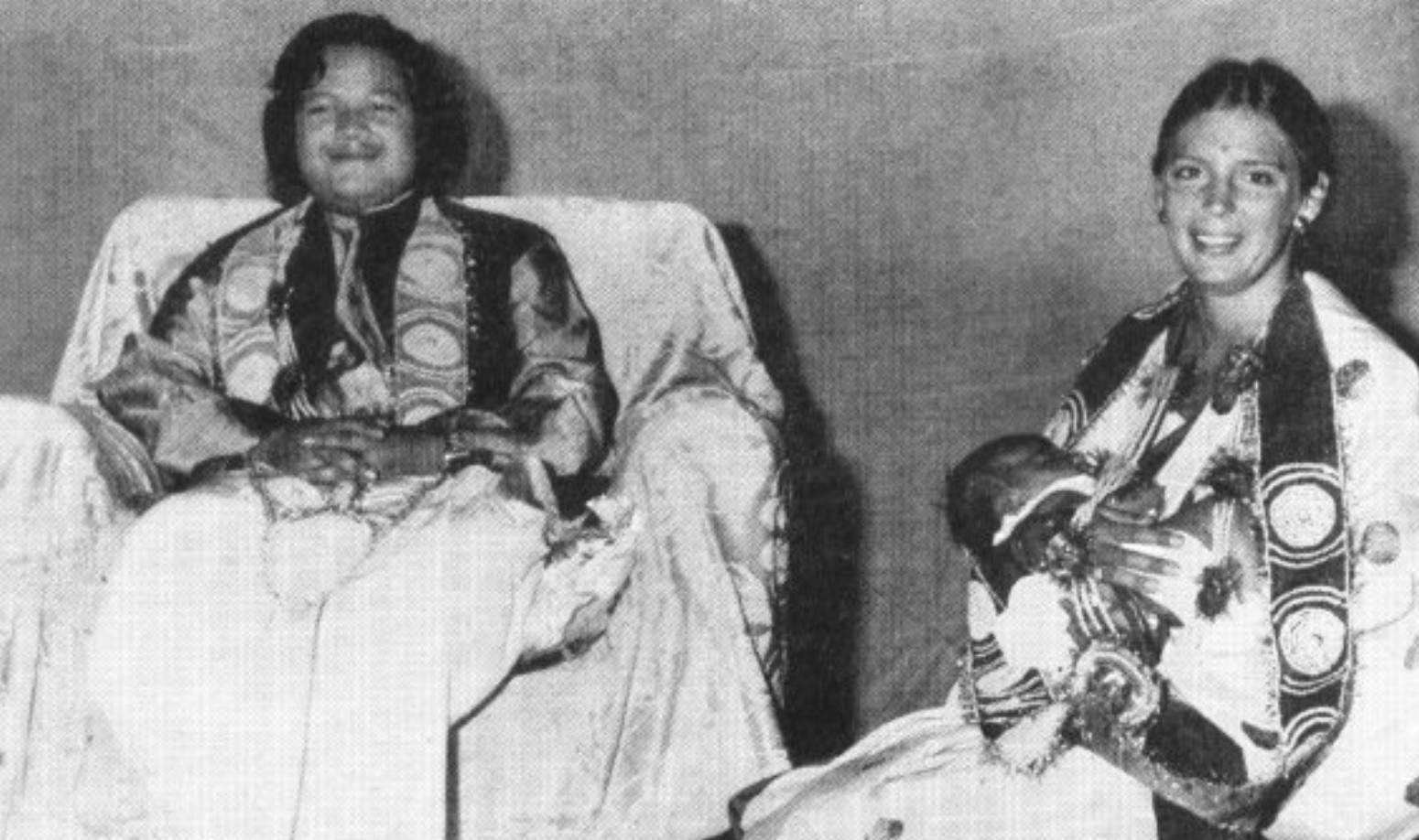
Internal conflict followed in 1974. Rawat’s marriage to Marolyn Johnson, an American follower, was opposed by his mother, Mata Ji, who disapproved of both the union and his increasingly Western lifestyle. She disowned him and attempted to install his elder brother, Satpal Maharaj, as leader. This resulted in a permanent split: the Indian branch remained under family control, while Western branches stayed aligned with Rawat.
During the mid-1970s, the movement became a focus of the broader anti-cult movement. Critics and former members accused the Divine Light Mission of using mind control. Public concern was amplified by the visible devotion of followers, known as “premies,” and Rawat’s lifestyle, which included residences in Malibu and ownership of luxury cars. Critics argued that the organization supported his lifestyle, while supporters described such offerings as voluntary.
In the early 1980s, Rawat began a process of restructuring aimed at making his message more broadly accessible. He dropped the title “Guru Maharaj Ji,” using “Maharaji” or simply Prem Rawat. Ashrams were closed, and followers were encouraged to move away from Indian cultural and religious forms. In 1983, the Divine Light Mission was renamed “Elan Vital.” The name, derived from the work of Henri Bergson, was intended to convey the idea of a “vital force” rather than a formal religion.
Throughout the 1980s and 1990s, Elan Vital functioned as an umbrella for independent national groups, focusing on a form of “practical mysticism” centered on four meditation techniques. Despite these changes, the “cult” designation continued in some contexts. In 1996, a French parliamentary commission listed Elan Vital among groups it classified as cults, and media outlets in Australia and the United States continued to use similar terminology. Former members also raised concerns about a perceived lack of philanthropic activity.
In 2001, Rawat established The Prem Rawat Foundation to expand humanitarian initiatives and introduce the Peace Education Program. This program was later used in correctional facilities and government institutions in multiple countries. The shift toward structured philanthropy addressed earlier criticisms and contributed to a repositioning of Rawat as an international speaker and advocate for peace rather than a traditional religious figure.
In 2010, Elan Vital formally ceased operations as an independent entity. Its functions were absorbed into other organizations, including Words of Peace International, reflecting a transition from a membership-based movement to a global media and speaking platform.
Key Sources:
The Australian Associated Press (2002, September 3). Guru’s followers flock to hear him speak.
Geaves, R. (2019). Prem Rawat and Counterculture: Glastonbury and New Spiritualities. Bloomsbury Academic.
Glock, C. Y., & Bellah, R. N. (1976). The new religious consciousness. University of California Press.