The Evangelical Baptist Church of Korea, popularly known as the “Salvation Sect,” was established in 1962 by Yoo Byung-eun and his father-in-law, Kwon Shin-chan. Despite adopting the Baptist name, the group maintained no formal connection to the Korea Baptist Convention. Its theology held that once an individual was saved, they were permanently separated from future sins, a belief that drew criticism and “cult” designations from mainstream South Korean Presbyterian denominations.
Yoo was born in Kyoto, Japan, in 1941 and returned to Korea after World War II. He later founded the church after being expelled from a missionary-led Bible school. Over time, his influence within the church expanded beyond spiritual leadership into business operations. During the 1970s and 1980s, Yoo acquired Samwoo Trading Company and later founded Semo Corp., which grew into a conglomerate with interests ranging from toy manufacturing and cosmetics to shipbuilding.
The church and Yoo’s businesses were closely connected. Many employees at his companies were members of the church, and the group eventually established Geumsuwon, a large commune in Anseong. Members there practiced organic farming and supported Yoo’s business and artistic projects.
In 1987, police discovered 32 members of Odaeyang Trading Co. dead in a mass suicide at a factory site, including the company’s leader, Park Soon-ja. Although Park had former ties to Yoo’s church, subsequent investigations found no direct prosecutable link between Yoo and the deaths. The case nevertheless brought scrutiny to the church’s financial practices and Yoo’s influence.
In 1992, Yoo was convicted of habitual fraud for siphoning approximately ₩1.2 billion from church members to support his business ventures. He served a four-year prison sentence. Although authorities had cleared him of involvement in the Odaeyang deaths, Yoo’s imprisonment only strengthened public perceptions of Yoo as a “cult leader” persisted.
Following the 1997 Asian financial crisis, Semo Corp. went bankrupt, and Yoo formally stepped back from business leadership. His family, however, continued operating shipping interests through affiliated companies, most notably Chonghaejin Marine, established in 1999.
During the following decade, Yoo reinvented himself as a photographer under the pseudonym “Ahae.” Between 2009 and 2013, he claimed to have taken more than 2.7 million photographs through a single window at the Salvation Sect compound. His public relations firms organized exhibitions at international venues including the Louvre and Grand Central Terminal. These projects later came under scrutiny as investigators examined whether church-linked funds had been used to support them or whether they served as vehicles for money laundering.
Yoo returned to national attention on April 16, 2014, when the MV Sewol ferry capsized, killing 304 people, many of them high school students. The ferry was operated by Chonghaejin Marine, and investigations quickly focused on the Yoo family’s role in the company. Authorities alleged that corruption and financial mismanagement contributed to the disaster, including the diversion of funds that should have been allocated to safety and maintenance.
As public anger intensified, the South Korean government launched a large-scale manhunt for Yoo involving thousands of police officers. The Salvation Sect compound became the center of a standoff as hundreds of church members protested the investigation, arguing that they were being treated as scapegoats to deflect criticism over the government’s rescue response.
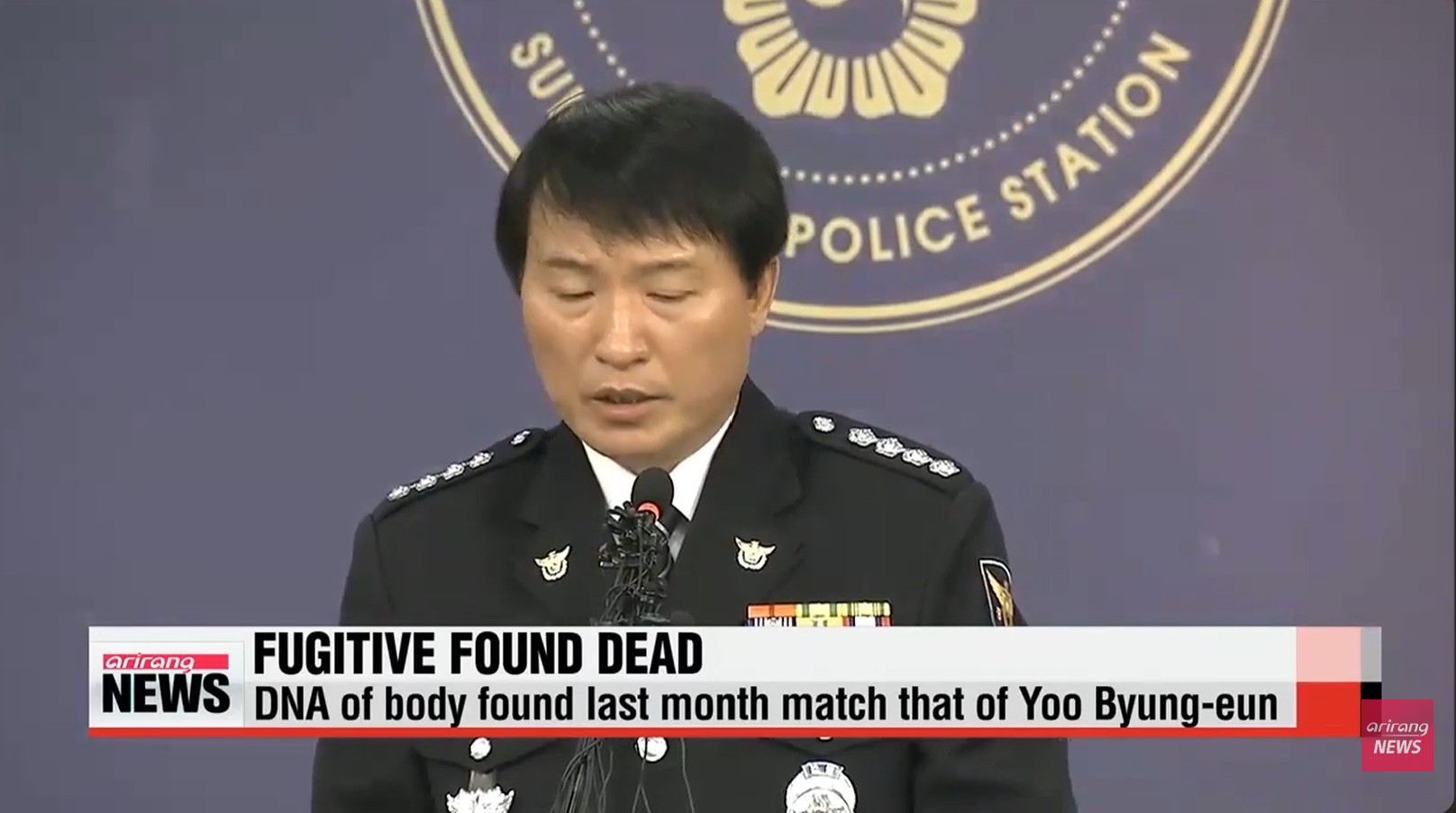
During the search, church leadership publicly stated that members would protect Yoo even if it resulted in mass arrests. The manhunt ended in July 2014 when a badly decomposed body discovered in a plum field in Suncheon was identified through DNA testing as Yoo Byung-eun. The exact cause of death was never determined, contributing to ongoing speculation and skepticism.
Later legal reviews and reports from the Incheon District Prosecutor’s Office in late 2014 concluded that while financial irregularities existed within Yoo’s business network, investigators found no evidence that member donations had been directly embezzled to finance his corporate expansion.
Despite the death of its founder and the fallout from the Sewol disaster, the cgurch continues to operate. Membership estimates vary widely, with the organization claiming around 100,000 followers while outside observers estimate a core membership closer to 20,000.
Key Sources:
Chance, D. (2014, April 29). From God.com to photography, Korea ferry founder has diverse interests. Reuters.
Gordts, E. (2014, April 23). Prosecutors Raid Home Of South Korean Ferry Owner. HuffPost.
Kang, H. (2014, April 26). “Salvation sect” suspected of backing Yoo’s business. The Korea Times.
Paek, S. (2014, April 25). Salvation Sect is Unrelated to Korean Church; Yu is Fraudulent Peddler of Unknown Religion. The Kukmin Daily.
Park, J. (2014, May 21). South Korean sect submits to search for founder linked to doomed ferry. Reuters.