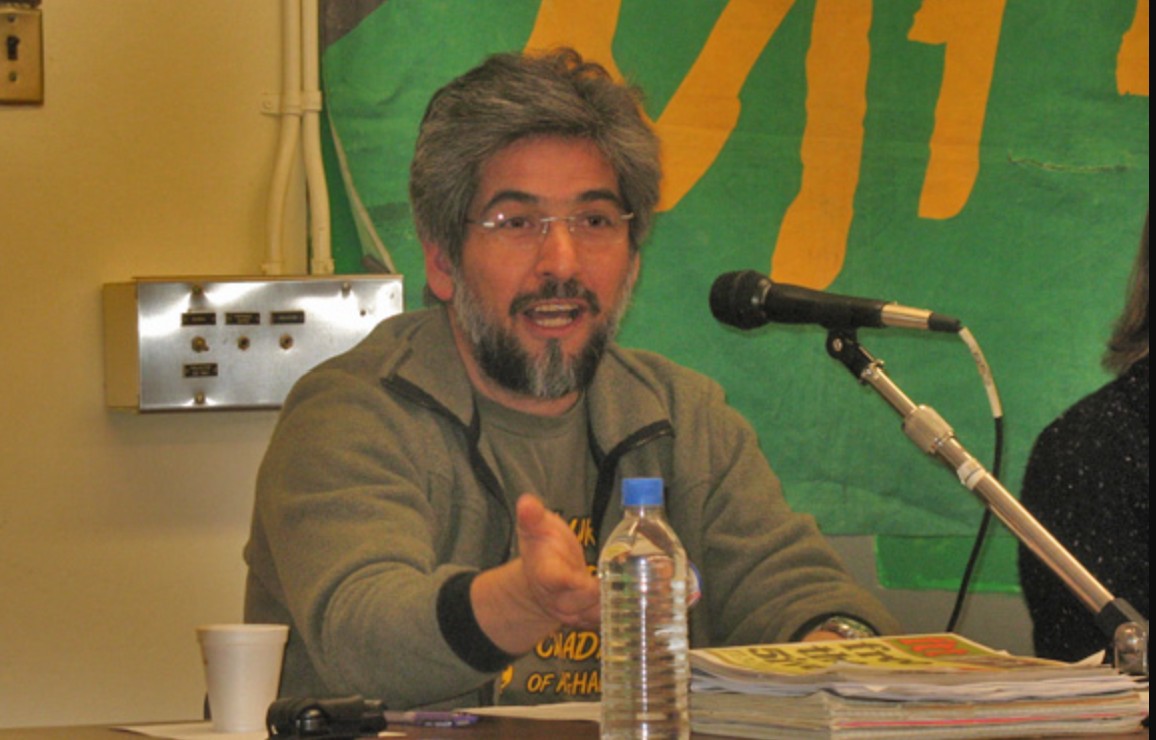
The Fire This Time Movement for Social Justice, usually referred to simply as “Fire This Time,” is a left-wing organization that some critics say acts as a political cult. It emerged in British Columbia, Canada, in the early 2000s as a revolutionary socialist organization. Fire This Time presents itself as an internationalist action organization, arguing that local struggles are inseparable from international conflicts. The movement relies heavily on public campaigns, demonstrations, and street-level activism. Its recruitment efforts have focused particularly on low-wage workers, immigrants, refugees, and Indigenous communities.
Fire This Time was co-founded and led by Ali Yerevani, who established a central leadership role within the network of activist fronts. From 2002 to 2006, the organization concentrated much of its recruitment activity on university and college campuses across British Columbia’s Lower Mainland. It established student clubs and placed members within student union executives and campus newspapers at institutions including Simon Fraser University and the University of British Columbia.
Campus observers and student editors during this period described the group’s representatives as dogmatic and uncompromising. They frequently alleged that the organization sought to place members within student media to circulate press releases and obtain student union funding for its initiatives.
Internal tensions and criticism from the broader Vancouver activist community came to public attention in February 2007, when Ivan Drury, a founding member and veteran activist, published a 5,000-word open letter announcing his resignation. Drury’s account provided the first detailed internal confirmation of long-standing rumors concerning the group’s insular and highly centralized methods of operation.
The letter portrayed Yerevani as a charismatic leader who exercised total authority over a small cadre of roughly fifteen followers. According to Drury, Yerevani demanded complete commitment and dismissed internal dissent as evidence of “petit-bourgeois” tendencies. Drury described rigid organizational expectations governing members’ daily lives, including their clothing choices, schedules, and rules relating to domestic chores.
According to Drury’s testimony, recruitment relied on a cycle of confidence-building followed by systematic criticism intended to weaken a recruit’s independence. Members’ reading lists were closely controlled, and independent ideological study was discouraged in favor of a prescribed sequence of Marxist texts reviewed under Yerevani’s supervision. Drury acknowledged participating in “exit meetings” designed to undermine the confidence of departing members in order to discourage further political involvement. He also described incidents in which members were questioned extensively about maintaining relationships with family members outside the organization. In one case, a member was reportedly pressured to use her parents’ credit cards to purchase equipment for the movement.
Drury further alleged that the group engaged in physical violence and efforts to disrupt other left-wing coalitions. He admitted assisting Yerevani in the 2005 assault of Mike Krebs, another founding member who was attempting to leave the organization. The incident contributed to the resignation of additional organizers who objected to the use of violence.
Fire This Time also sought to undermine perceived rivals within the anti-war movement. Drury recounted accessing the personal email account of a prominent Vancouver activist, after which the group published the private correspondence as part of a campaign against the StopWar.ca coalition. He also described efforts to infiltrate religious networks under false pretenses during the 2006 Israel-Lebanon conflict in order to compete with established solidarity organizations. Additional tactics included disrupting public rallies so that the group’s banners would remain at the front of marches organized by other groups.
A subsequent account from a different former supporter, published in 2014, suggested that the organization’s internal structure and collective lifestyle had remained largely unchanged in the years following Drury’s departure. This account described a demanding daily routine in which organizers were expected to devote all waking hours outside their regular employment to movement activities. This reportedly resulted in chronic sleep deprivation and the deterioration of relationships outside the group. Meetings often continued into the early morning because of lengthy lectures delivered by Yerevani, raising concerns about exhausted members driving while severely fatigued.
The 2014 account also reinforced earlier claims regarding gender roles and lifestyle expectations within the leadership circle. Yerevani reportedly argued that women dedicated to revolutionary work should not have children. Female organizers were frequently assigned to visible spokesperson roles to project an image of feminist representation, a practice critics characterized as tokenistic.
Public representatives for Fire This Time consistently rejected allegations that the organization functioned as a cult. Spokespeople argued that members were not required to surrender their financial assets and faced no physical barriers if they chose to leave. Several long-term members maintain that these factors distinguished the movement from organizations commonly described as destructive cults.
Key Sources:
Drury, I. (2008, February 3). Public letter: My resignation from Fire This Time. No Fire This Time.
Isla. (2016, March 10). My Year Inside FTT (Fire This Time).
Millar, E. (2008, March 12). That revolution thing? My bad. Former leader of anti-war group apologizes, reveals secrets, says it is a “cult.” Maclean’s.