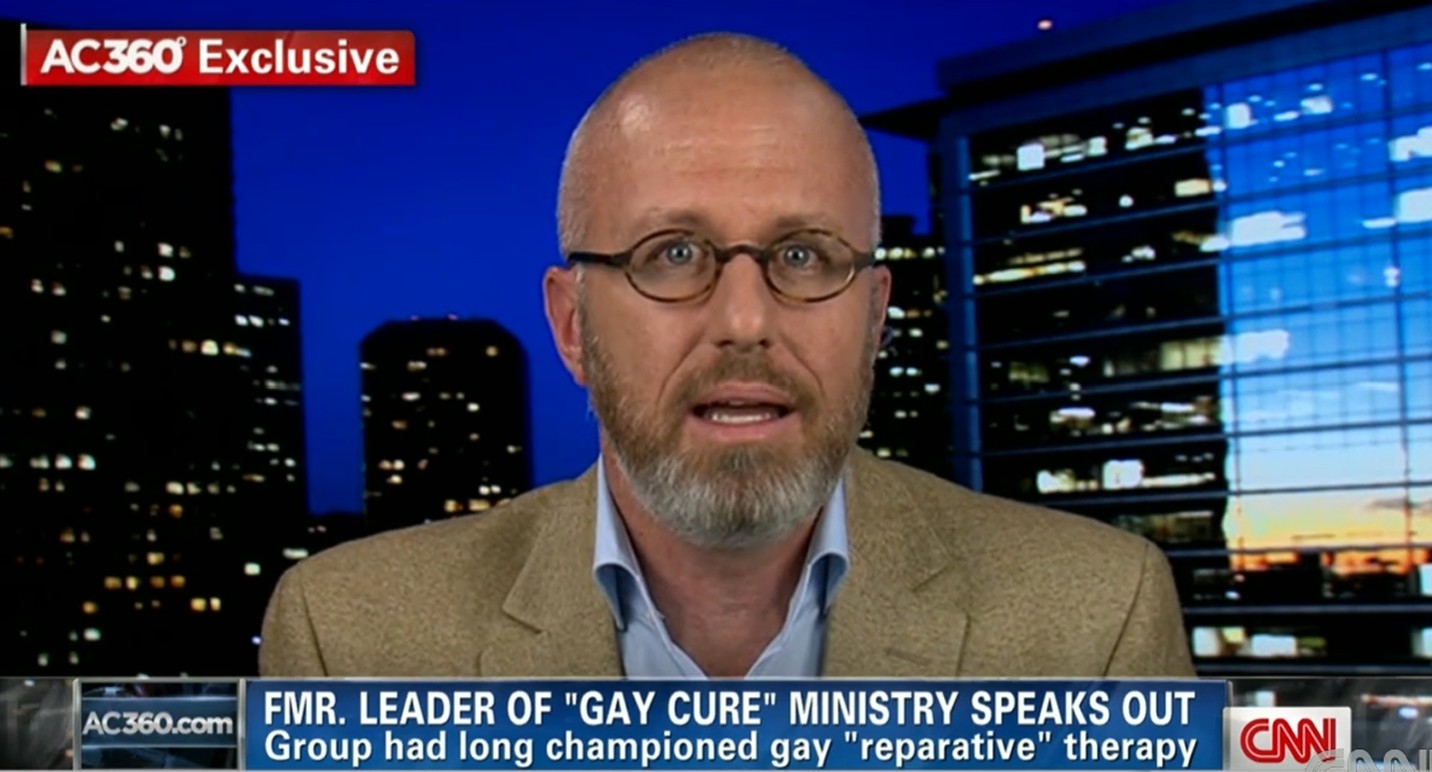
Exodus International was a Christian organization founded in 1976 that became the leading organization within the “ex-gay” movement. Exodus maintained that through prayer, pastoral counseling, and reparative therapy, individuals could change or suppress their sexual orientation. By 2006, the organization served as an administrative network for more than 250 local ministries across the United States and Canada, along with another 150 ministries operating in 17 countries.
The organization’s theological foundation centered on the belief that homosexual behavior was sinful and that same-sex attraction reflected deeper psychological or spiritual issues. During the 1990s, under the leadership of Sy Rogers, Exodus expanded internationally and continued promoting the view that homosexual relationships were incompatible with biblical teachings. The group organized conferences such as the “Love Won Out” series, acquired from Focus on the Family, and supported campaigns including the “Day of Truth,” which aimed to challenge growing acceptance of homosexuality in schools.
As Exodus grew in visibility, it also faced criticism from former participants, mental health professionals, and advocacy groups. Critics argued that the organization’s methods created high levels of psychological pressure and social isolation. Former participants described an environment in which failure to achieve the promised “change” was often framed as a spiritual or personal shortcoming. Some also alleged that members were encouraged to distance themselves from previous social networks, secular friendships, and aspects of their past identities, replacing them with a tightly connected community centered on the organization’s teachings.
Former members such as Peterson Toscano and Michael Bussee later spoke publicly about their experiences. They described an initial sense of acceptance followed by periods of depression, anxiety, and emotional distress. Some former participants stated that suppressing same-sex attraction contributed to severe psychological strain, including suicidal thoughts. Critics also questioned the organization’s reliance on “former homosexual” leaders who were presented as evidence that orientation change was achievable.
In 1979, founders Michael Bussee and Gary Cooper left the movement and entered into a committed relationship together. In 2000, board chairman John Paulk, who had frequently been promoted as an example of successful conversion therapy, was photographed at a gay bar. After initially denying the incident, he was later removed from his position. Years afterward, Paulk publicly apologized and stated that reparative therapy had not worked for him and had caused harm.
In the late 2000s, Exodus International became involved in a broader international controversy. In 2009, board member Don Schmierer traveled to Uganda to participate in a conference where homosexuality was described as a condition that could be changed. Shortly afterward, lawmakers introduced the Uganda Anti-Homosexuality Act, which initially proposed the death penalty for certain homosexual acts. Although Exodus president Alan Chambers later expressed regret over the organization’s involvement and opposed the legislation, critics argued that the incident reinforced concerns about the movement’s political and social influence abroad.
During the early 2010s, the organization began reassessing its public stance under Chambers’ leadership. In January 2012, speaking at a Gay Christian Network conference, Chambers stated that 99.9 percent of the people he had encountered through Exodus had not experienced a change in their sexual orientation. He also distanced the organization from the term “reparative therapy” and apologized for the long-running slogan “Change Is Possible.” Although Chambers continued to support a conservative view of biblical marriage, he acknowledged that many participants experienced shame and guilt when orientation change did not occur.
By June 2012, Chambers publicly stated that conversion therapy could be harmful and ineffective. His comments created divisions within the ex-gay movement. Several affiliated ministries and organizations, including National Association for Research & Therapy of Homosexuality, opposed the new direction. Some ministries left Exodus International and formed the Restored Hope Network to continue supporting orientation-change efforts.
On June 19, 2013, following a year of internal discussions, the board of directors voted to close Exodus International. At the organization’s 38th annual conference, Chambers issued a formal apology to the LGBTQ+ community for what he described as the pain caused by the movement’s promotion of reparative theories and its treatment of parents and families. He also acknowledged that the organization had often operated within what he called a “culture of fear” and had not always provided the supportive environment it claimed to offer.
Key Sources:
Gilgoff, D. (2010, October 6). Christian group pulls support for event challenging homosexuality. CNN.
Johnson, G. (2021). Still Time to Care: What We Can Learn from the Church’s Failed Attempt to Cure Homosexuality. Zondervan.
Kaleem, J., & Shapiro, L. (2016, February 2). Ex-Gay Christian groups will continue after exodus as religious LGBT support grows. HuffPost.
Snow, J. (2013, June 20). “Ex-gay” ministry apologizes to LGBT community, shuts down. Metro Weekly.
Whitley-Berry, V. (2021, August 2). Former “Ex-Gay” leaders denounce “Conversion therapy” in a new documentary. NPR.