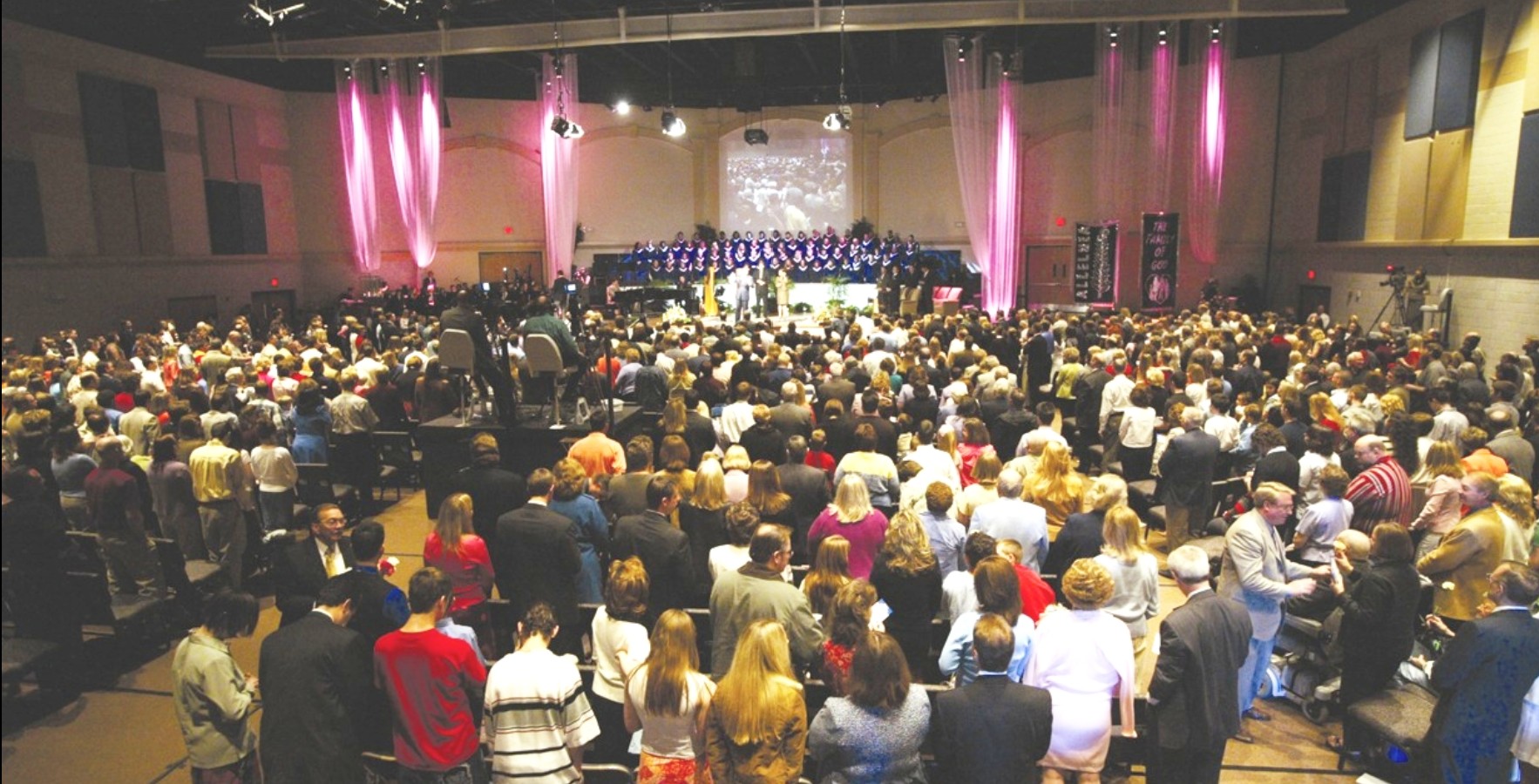
First Family Church was a Southern Baptist megachurch established in Overland Park, Kansas, in 1996 when its founder and senior pastor, Jerry Johnston, liquidated nearly $200,000 in assets from his debt-free organization, Jerry Johnston Ministries, to launch the new church. During its early years, the congregation operated out of 11 different rental facilities, including local schools and commercial movie theaters, while experiencing rapid growth.
In May 2000, the church began construction on a permanent campus situated on 51 acres of land. Completed in March 2001, the facility included a 1,500-seat sanctuary built at a cost of $10.1 million. By April 2001, membership had reached approximately 4,000 individuals, making it one of the fastest-growing congregations in the region.
The church expanded its outreach in July 2001 by launching a television ministry that broadcast Johnston’s sermons through satellite and web video streaming. It later established First Family Academy in 2007. Alongside these programs, the church operated several community initiatives, including an annual holiday meal program, baby showers for expectant mothers lacking support, and regular donations to local homeless and domestic violence shelters.
Johnston frequently used his platform to participate in public debates, advocating for the teaching of intelligent design rather than evolution and encouraging conservative political engagement. In September 2004, he hosted evangelist Jerry Falwell to rally Christian leaders ahead of the U.S. presidential election. The church also publicly supported the 2005 Kansas constitutional amendment banning same-sex marriage.
The church’s trajectory shifted significantly in March 2007 when The Kansas City Star published a front-page investigative series examining the organization’s governance, finances, and the Johnston family’s lifestyle. The reports stated that hundreds of members had quietly left the congregation because of concerns about financial transparency. Investigators noted that First Family Church was structured with limited external financial oversight and had repeatedly declined to join the Evangelical Council for Financial Accountability, an organization that reviews the fiscal practices of religious groups. In response to the reports, Bott Radio Network, a major Christian broadcaster operating 50 stations, canceled Johnston’s daily 30-minute radio program, stating that the ministry did not meet its required accountability standards.
Public scrutiny intensified as allegations emerged concerning the church’s family-centered leadership structure, prompting questions about nepotism and cultlike dynamics. The senior leadership of the megachurch consisted largely of Johnston’s immediate family. His wife directed comfort ministries, his 25-year-old son served as executive pastor and media chief operating officer, his two sons-in-law held youth and associate pastoral roles, his daughters led worship and youth groups, and his mother worked as an executive secretary.
Additional controversies involved allegations of financial exploitation and the diversion of charitable resources for personal benefit. Former members described the Johnston family’s lifestyle as lavish, citing their occupancy of multiple newly constructed homes, the use of luxury vehicles owned by the church, and the visible use of an invitation-only American Express Centurion credit card.
Legal and regulatory scrutiny followed. Multiple complaints were filed with the Internal Revenue Service alleging that church employees had been pressured to work for the Johnston family’s private for-profit media companies and that church donations were used to support private publishing ventures. In July 2007, the Kansas Attorney General’s office opened an investigation into whether church funds had been improperly diverted into the family’s personal accounts. The investigation ultimately concluded without finding a violation of the state’s Consumer Protection Act.
The accumulating controversies contributed to mounting financial instability. In 2008, the church resolved IRS tax liens exceeding $107,000 related to unpaid 2007 payroll taxes. The financial decline culminated in February 2011, when Regions Financial Corporation filed a foreclosure petition seeking receivership over the church’s remaining $14.4 million debt across two loans. Court documents from the foreclosure proceedings revealed that more than $600,000 of the church’s $915,000 annual payroll was paid directly to members of the Johnston family.
On September 5, 2011, Johnston announced that the congregation would permanently lose the property, and the facility closed on September 11, 2011. The remaining members briefly relocated to a local high school under the name New Day Church Kansas City. That congregation dissolved one year later, in September 2012.
Key Sources:
Gryboski, M. (2012, January 3). 125,000 Sq. Foot Kansas Megachurch Building Still for Sale. The Christian Post.
Johnston, J. (1991). The Last Days of Planet Earth. Harvest House Publishing.
Oberholtz, C. (2011, September 5). Overland Park mega-church closes its doors. KCTV-TV.
Thomas, J. L. (2007, March 11). First Family payroll includes several Johnston family members. The Kansas City Star.
Thomas, J. L. (2007, March 11). Lavish lifestyles at odds with pastor’s calls for the faithful to sacrifice. The Kansas City Star.