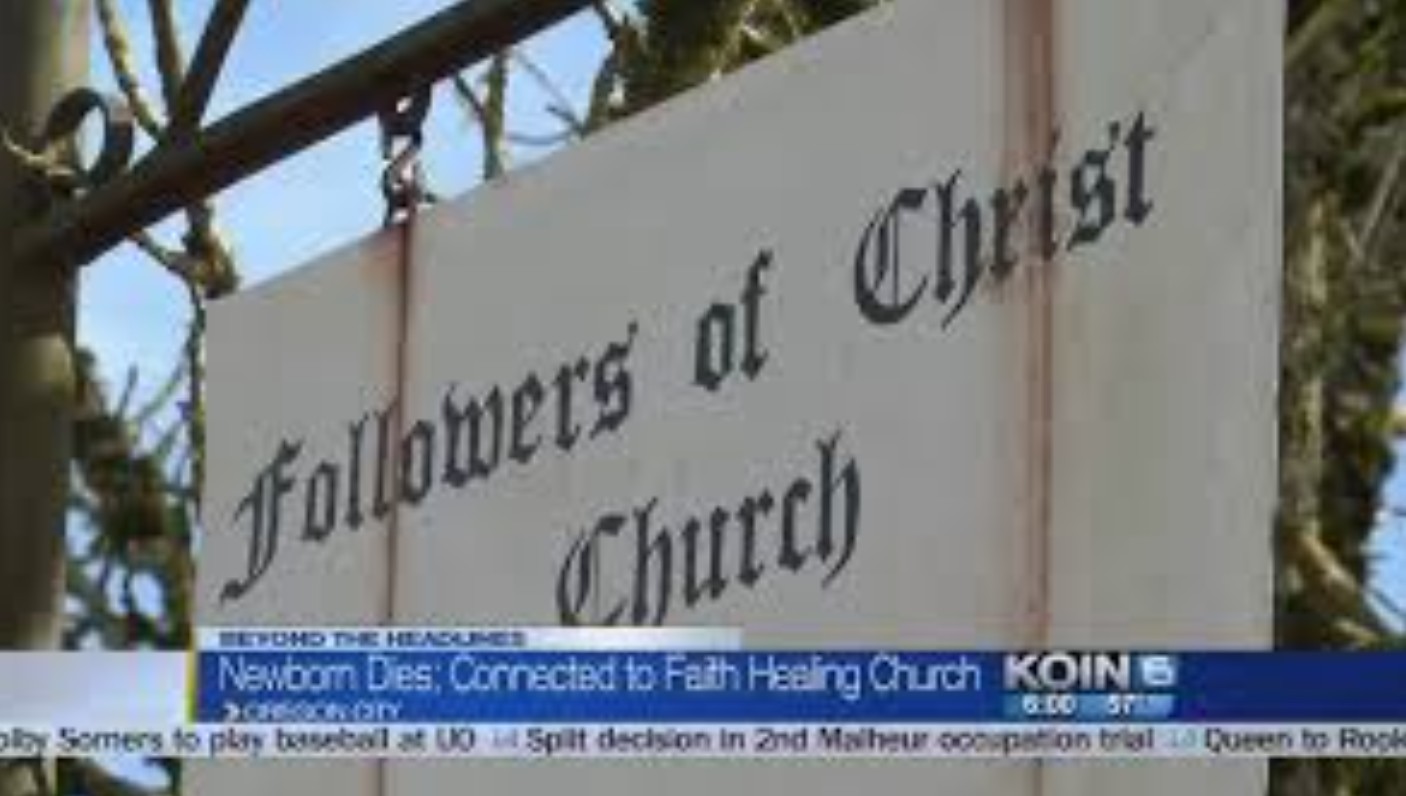
The Followers of Christ is a small independent Christian denomination with congregations in Oklahoma, Oregon, Idaho, and Alberta. The church was founded in Chanute, Kansas, around 1880 by Marion Reece, emerging from the Holiness Pentecostal tradition, emphasizing a literal interpretation of the Bible. Leadership later passed to Elder John Marshall Morris and his son, Marion Morris, shifting the church’s center of activity to Ringwood, Oklahoma. During the 1920s, missionary efforts expanded the denomination into California and Idaho.
During the 1940s, minister Walter White relocated from Boise, Idaho, to Oregon City, Oregon, where he established a separate congregation. Over time, the Oregon City church became increasingly isolated from both the broader denomination and the surrounding community, eventually attracting significant legal and public attention.
During his leadership, White exercised extensive authority within the congregation. According to former members and observers, he presented himself as divinely chosen and demanded strict obedience from followers. The church developed a male-centered structure and adopted detailed rules governing personal behavior. Following White’s death in 1969 and the deaths of his ordained elders during the 1980s, the congregation chose not to appoint replacement ministers. As a result, the church became increasingly inward-focused. Regular services evolved into gatherings centered primarily on hymn singing, without traditional sermons, Bible readings, or formal religious instruction.
One of the defining doctrines of the Followers of Christ is faith healing. Members believe that illness should be treated through prayer, fasting, and the laying on of hands by church elders, while medical intervention is often viewed as a sign of insufficient faith. Former members and outside observers have alleged that these beliefs are reinforced through social pressure and the threat of shunning. Individuals who seek medical treatment or openly challenge church practices may face exclusion from the community and the loss of family relationships. Some former members have reported seeking medical care secretly and traveling considerable distances to avoid being recognized by fellow congregants.
Public scrutiny of the church increased during the latter half of the century as state medical authorities began examining unusually high rates of child mortality within the community. Investigations by journalists and medical examiners found that many children buried in the church’s cemetery had died from illnesses that were generally treatable through conventional medicine, including common infections that could have been addressed with antibiotics. Stillbirths and infant deaths during the first year of life were also reported at elevated rates. Medical experts attributed these outcomes in part to limited prenatal care and reliance on unlicensed church midwives. Maternal mortality associated with home births was likewise reported to be substantially higher than state averages. Church members generally maintained that life and death were matters determined by divine will.
Before 1999, Oregon authorities had limited ability to pursue criminal charges in many of these cases because the state’s criminal code contained religious exemptions that protected parents who relied on faith healing from certain manslaughter and child abuse prosecutions. These provisions were criticized by members of the medical community and by former church members, while civil liberties organizations and faith-healing advocates argued that religious freedom should be protected from government interference.
The legal landscape changed in 1999 when the Oregon Legislature repealed the religious defense for homicide and manslaughter. The change followed years of concern regarding preventable childhood deaths associated with faith-healing practices.
The repeal led to a series of criminal prosecutions involving church members. In 2008, the death of a toddler from untreated pneumonia resulted in manslaughter charges against her parents, Carl and Raylene Worthington. Later that year, the girl’s teenage uncle, Neil Beagley, died from a treatable bladder blockage after his family declined medical treatment. The two cases drew national attention to the church’s practices. Although the Worthingtons were largely acquitted of manslaughter charges, Neil Beagley’s parents were convicted of criminally negligent homicide in 2010 and sentenced to prison. The Oregon Court of Appeals later upheld the convictions, ruling that religious beliefs do not eliminate a parent’s legal duty to recognize substantial risks to a child’s life.
In 2011, Oregon lawmakers narrowed the remaining protections further by eliminating religious belief as an affirmative defense in all homicide cases. That same year, church members Timothy and Rebecca Wyland were convicted of criminal mistreatment after relying on faith healing for their infant daughter, who nearly lost her sight because of an untreated medical condition. Later in 2011, Dale and Shannon Hickman were convicted of second-degree manslaughter following the death of their premature newborn. Prosecutors argued that the child would likely have survived had emergency medical treatment been sought rather than relying solely on prayer and anointing with oil.
Legal scrutiny continued in the years that followed. In 2017, authorities investigated the death of a premature twin daughter born to Sarah Mitchell, the sister of Shannon Hickman and a great-granddaughter of Walter White, after family members failed to contact emergency services during the infant’s respiratory distress.
Legal action involving members of the church continued into the 2020s. In September 2025, Taylor and Blair Edwards were sentenced to jail time and probation after pleading guilty to criminal mistreatment following the death of their newborn from complications related to untreated jaundice. As part of the sentence, the court required medical monitoring and health insurance coverage for the couple’s surviving children.
While some younger members have reportedly questioned the church’s continued reliance on faith healing, the remaining core of the Oregon City congregation has generally maintained its traditional practices. Many members view ongoing legal challenges and government intervention through a religious framework, interpreting them as evidence of long-standing prophecies concerning opposition to their faith.
Key Sources:
Aljobory, S. (2025, September 9). Followers of Christ church face jail, probation for faith-healing neglect of newborn. KCBY.
Andrews, R. (2017, March 10). Former Followers of Christ member: It’s a cult. KATU.
Van Biema, D. (1998, August 31). Faith or healing? Time.