A religious movement centered around Bill and Patsy Freeman originated in the late 1950s and evolved over several decades into an independent fundamentalist Christian organization. Bill and Patsy Freeman married as teenagers in 1956 and initially left Bill Freeman’s Roman Catholic upbringing to join a Quaker congregation in Garden Grove, California. By the late 1960s, they had aligned themselves with the Local Church movement, a communal Christian movement established by the Chinese immigrant preacher Witness Lee. Their involvement marked the beginning of the Freemans’ leadership within alternative evangelical circles.
In 1970, the Freemans relocated to Seattle to establish and lead a congregation affiliated with Witness Lee’s movement, which became known as the Church in Seattle. Bill Freeman, a graduate of Fuller Theological Seminary, expanded the ministry by authoring more than a dozen theological books and founding a nonprofit publishing organization called the Ministry of the Word. Under the couple’s leadership, the Seattle congregation grew substantially, attracting young adults and college students, particularly through recruitment efforts on the University of Washington campus.
As the congregation expanded, former members and outside observers later alleged that increasingly restrictive administrative and lifestyle practices developed within the community. Former followers reported that daily life was governed by numerous unwritten rules and close supervision by senior members. New recruits were encouraged to sever or significantly reduce contact with secular friends and non-member family members.
According to former members, the leadership justified these practices through particular scriptural interpretations emphasizing complete devotion to Christ. Patsy Freeman reportedly cited biblical passages about hating one’s family to discourage members from giving holiday gifts to relatives.
Former members also alleged that the group’s leadership exercised substantial influence over members’ personal relationships, including marriage. Steve and Deborah Kirk later recalled that Patsy Freeman instructed them to marry in 1972 despite the fact that they had never previously met. When both families requested a six-month delay, they said leadership responded that postponing the wedding would constitute disobedience to divine revelation, and the marriage took place within three weeks.
The group also established the Heritage School, a private educational institution in the Seattle area that educated many members’ children. Former students described a highly disciplined and isolating environment intended to enforce behavioral conformity and discourage individual identity.
The school and the broader community also held periodic “burnings,” during which members were encouraged to destroy sentimental possessions, including family photographs and childhood toys, because they were considered obstacles to complete spiritual devotion. In addition, transcripts from 1981 documented instances in which Patsy Freeman administered physical discipline to infants as young as five months old, along with directives requiring female members to wear loose, non-attractive clothing.
Within the group’s inner circle, which consisted of approximately a dozen women serving as Patsy Freeman’s personal aides and housekeepers, former members described especially strict behavioral expectations. They were prohibited from wearing makeup or jewelry, watching television, reading secular newspapers, or celebrating traditional holidays.
Members were expected to consult Patsy Freeman about routine household decisions, including laundry schedules and house paint colors, while also monitoring one another for deviations from group standards. According to former members, serious violations could result in isolation and confinement, during which individuals were cut off from communication and meals were passed through closed doors.
Critics also alleged that the Freemans relied extensively on the labor and financial contributions of followers. Members reportedly donated significant portions of their income, in some cases as much as 40 percent, to the church.
The group also regularly purchased residential properties, renovated them using volunteer labor from members, and resold them for profit. Former members said this practice generated substantial revenue for the ministry while providing a rotating series of communal residences for followers, who frequently relocated at the direction of church leadership.
By the mid-1980s, the Freemans’ leadership had drawn criticism from the broader Local Church movement. In 1983, a letter signed by 71 elders formally rebuked Bill Freeman for what they described as legalistic practices that intruded into family life and contributed to the breakup of marriages.
In 1986, continuing disputes over Patsy Freeman’s influence within member families culminated in a permanent split between the Freemans and the mainstream Local Church network. Contemporary accounts indicated that the separation resulted from Bill Freeman’s refusal to address criticism of his wife’s leadership.
Following the schism, the Freemans relocated to Scottsdale, Arizona, in 1987 with approximately 60 loyal followers, representing about one-third of their former Seattle congregation. There they established a new church that eventually grew to between 150 and 250 members.
The community acquired roughly 20 homes surrounding its central church building, creating a closely connected residential enclave. Recruitment efforts continued, with the group actively targeting students at Arizona State University. Financially, the ministry reached its peak during the late 1990s, with the Ministry of the Word reporting more than $900,000 in contributions between 1995 and 1998.
By the late 1990s, internal disagreements and personal conflicts had begun to divide the Scottsdale congregation. Jim Longmate, who had entered an arranged marriage within the group, later stated that when his work as a pharmacist limited his church participation, Patsy Freeman encouraged his wife and children to distance themselves from him, contributing to a 1998 divorce and the complete loss of contact with his daughters.
In December 1998, Patsy Freeman filed for divorce from Bill Freeman. Although the couple exchanged financial disclosures, the case was dismissed in 1999. They remained legally married but lived separately for about five years, during which Patsy led a large female-dominated faction to Lake Oswego, Oregon, while Bill lived in Moses Lake, Washington.
Elders who remained with the Scottsdale congregation later said they felt relieved following the Freemans’ departure and attributed many of the church’s previous problems to Patsy Freeman’s influence.
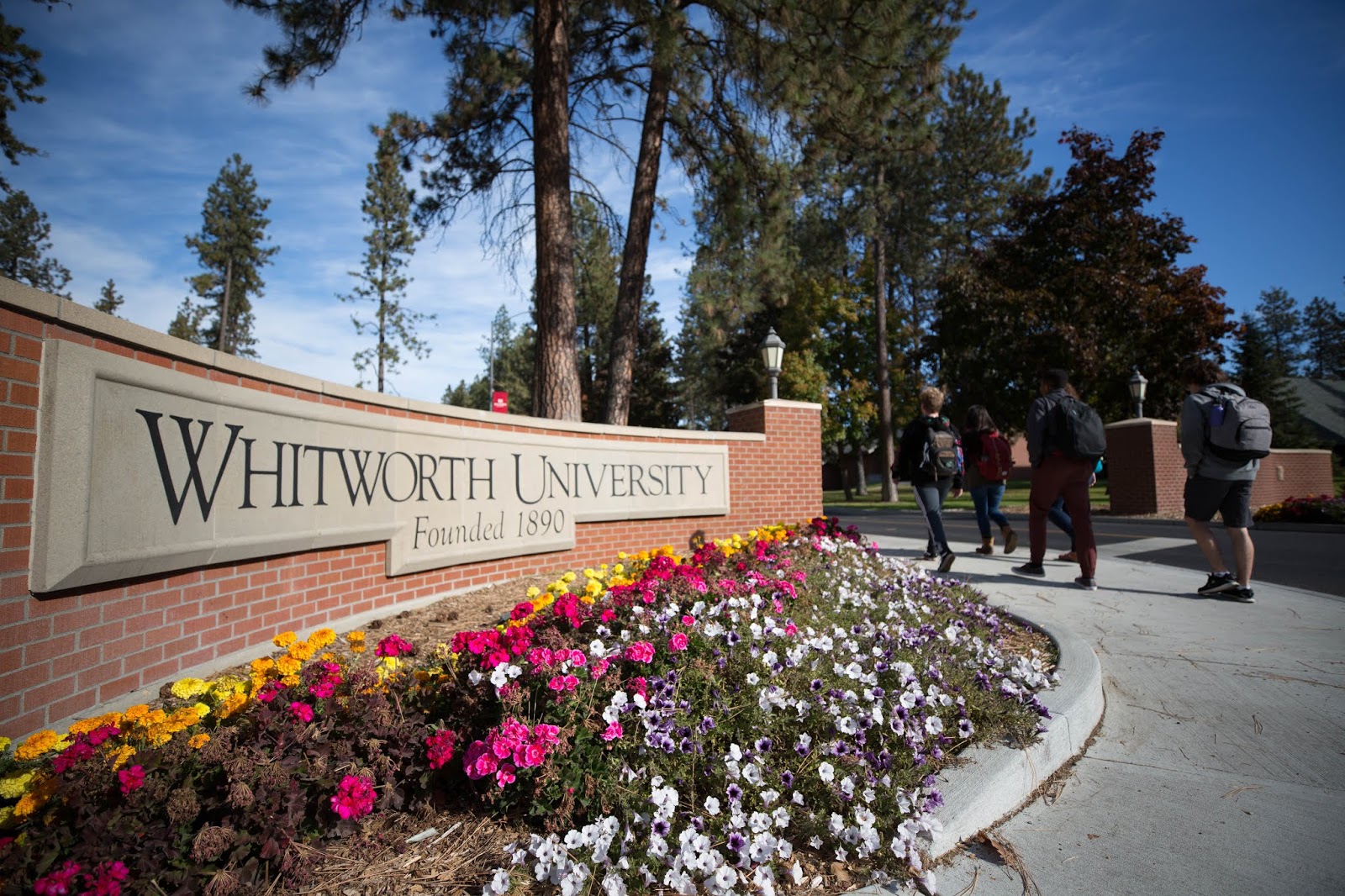
After approximately five years apart, Bill and Patsy Freeman reconciled and moved their operations to Spokane, Washington. In the autumn preceding university intervention, they and their associates began purchasing homes adjacent to the campus of Whitworth College, a private Christian institution.
Altogether, the group acquired six houses, spending more than $1 million on three of the properties, including the “Blue House,” which served as the Freemans’ residence. The prices paid substantially exceeded the properties’ assessed taxable values.
The concentration of these properties, together with familiar patterns such as large weekend work crews of out-of-town members performing continuous renovations and the continued separation of residences by gender, raised concerns among neighbors, former members, and university officials.
Aware of the group’s history of recruiting on college campuses, Whitworth College issued campus-wide warnings to students, faculty, and staff in early 2004 describing allegations made by former members regarding the group’s impact on individuals and families. Bill Freeman rejected the university’s characterization, describing the warnings as a “vendetta” based on the accounts of dissatisfied former members. He maintained that his activities in Spokane were limited to independent publishing and travel rather than organized recruitment on the Whitworth campus.
Key Sources:
Collins, C. (2005, February 15). Controversy next door. The Whitworthian.
Collins, C. (2005, February 22). Ex-members say Freemans created “group identity.” The Whitworthian.
Morgenthaler, K. (2008, November 12). Getting to know the Neighborhood: The Freemans. The Whitworthian,
Vestal, S. (2005, August 7). Controversial group settles in Spokane. The Spokane Spokesman-Review.