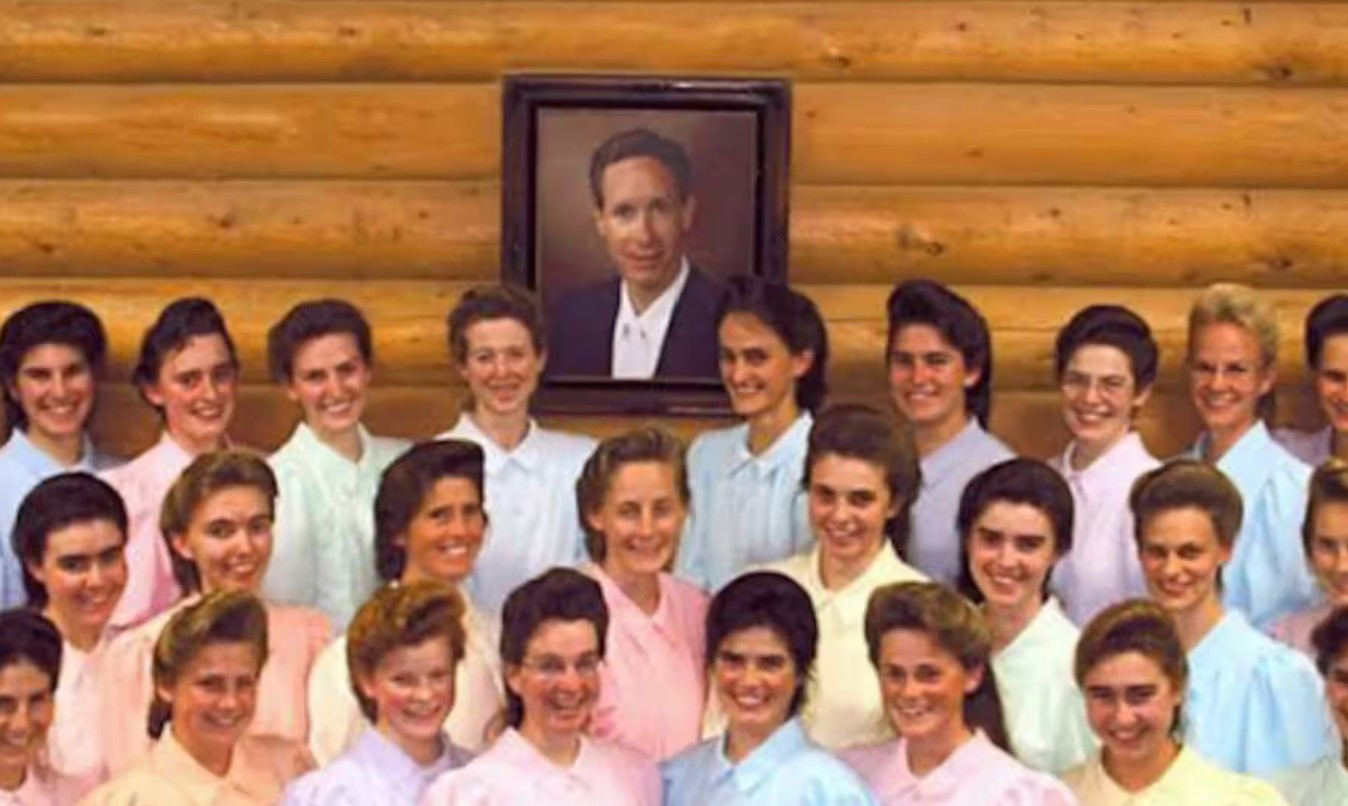
The Fundamentalist Church of Jesus Christ of Latter-Day Saints (FLDS) is a polygamous Mormon fundamentalist organization that originated in the early 20th century following a schism with the mainstream Church of Jesus Christ of Latter-Day Saints (LDS). The separation stemmed from the LDS Church’s formal renunciation of plural marriage in the 1890 Manifesto issued by Church President Wilford Woodruff, a position reinforced in 1904. Mainstream members who continued to practice or solemnize plural marriages faced excommunication.
Those seeking to preserve polygamy migrated to the remote border region of Short Creek along the Arizona-Utah border, which later became the twin municipalities of Colorado City, Arizona, and Hildale, Utah. The FLDS traces its spiritual authority to a purported 1886 revelation given to LDS President John Taylor, which adherents believe required the continuation of plural marriage. Under the “one man” doctrine, members maintained that Woodruff’s 1890 Manifesto caused him to forfeit his priesthood authority, transferring all divine priesthood keys exclusively to John W. Woolley and his son, Lorin C. Woolley.
During the 1930s, prominent Short Creek residents, including Lorin Woolley and John Y. Barlow, established the Council of Friends, a governing body of seven high priests responsible for overseeing the community. In 1935, the LDS Church excommunicated Short Creek residents who refused to sign pledges renouncing plural marriage, prompting Barlow to further institutionalize the practice. Internal disagreements later produced additional splinter groups, including the Apostolic United Brethren and the Kingston group. (It was around this time that the FLDS emerged as a separate entity, though it would not formally adopt that name until 1991.)
Tensions between the community and law enforcement culminated on July 26, 1953, when Arizona state police and National Guard forces carried out a large raid on Short Creek. The operation resulted in the arrest of the entire population, including more than 200 children, many of whom remained in state custody for over two years. Although it was the largest mass arrest of polygamists in U.S. history, the raid did not end the practice, and the settlement was later renamed Colorado City.
Following Barlow’s death, leadership passed to Leroy S. Johnson, who reinforced the “one man” doctrine, and later to Rulon Jeffs. In 1984, Rulon Jeffs formally incorporated the community as the FLDS and established an episcopal administrative structure centered on a single leader. Leadership transitions continued to generate divisions, with dissenters rejecting centralized authority and establishing a separate settlement in Centennial Park, Arizona, known as “The Work of Jesus Christ” or the “Second Ward.”
When Rulon Jeffs died in 2002, his son Warren Jeffs assumed leadership without a defined succession process, creating further factionalism. During a leadership dispute, Warren Jeffs excommunicated Winston Blackmore, who led the church’s Canadian branch in Bountiful, British Columbia. Approximately 700 Canadian members, or about half of the local congregation, followed Blackmore in forming an independent group.
Warren Steed Jeffs was born on December 3, 1955, in Sacramento, California, to Rulon Jeffs and Merilyn Steed. Raised near Salt Lake City, he served for roughly two decades beginning in 1976 as principal of Alta Academy, an FLDS private school, where he became known for strict disciplinary practices. After serving as a counselor to his father, he assumed the titles of “President and Prophet, Seer and Revelator” and “President of the Priesthood.”
Shortly after his father’s death, Jeffs instructed church leaders to leave Rulon Jeffs’s wives alone, but within a week he married nearly all of them himself. The exceptions were one woman who fled the compound and another who refused and was permanently barred from future marriage. As the only person authorized to solemnize marriages, Jeffs exercised complete authority over marital arrangements, reassigning wives, children, and property as punishment for disobedient men. In January 2004, he expelled approximately 20 men from Short Creek, including the town’s mayor, and reassigned their families to other church members.
Under Jeffs, church doctrine held that a man required at least three wives to reach the highest degree of heavenly salvation, reinforcing a patriarchal system that required women to submit to male authority. Marriages were governed through the “law of placing,” under which the prophet assigned women to men based on spiritual worthiness. Because older, high-status men accumulated multiple wives, the community experienced a shortage of marriageable women. Church leaders responded by excommunicating large numbers of teenage boys, often for relatively minor infractions such as listening to secular music or dating outside approved arrangements.
More than 400 young men were eventually expelled, becoming known as the “Lost Boys.” Many experienced homelessness and complete separation from their families. In 2014, several former members filed a federal lawsuit alleging the church had systematically removed young men to increase the number of young women available for senior church leaders.
Life within the FLDS community was governed by detailed behavioral rules. Tattoos and body piercings were prohibited. Women were forbidden from wearing short hair, makeup, trousers, or skirts above the knee and were required to wear long-sleeved pastel dresses in a traditional “prairie” style with stockings or undergarments. Hair was kept long based on the belief that women would use it to wash their husbands’ feet in the afterlife, while certain pastel colors identified the head of household to which a woman belonged. Men wore long-sleeved collared shirts and full-length trousers.
Historical evidence indicates this uniform appearance developed relatively recently. Photographs taken during the 1953 Short Creek raid show women wearing contemporary mid-century clothing with varied hairstyles and patterns, suggesting the now-familiar dress code was largely enforced under Warren Jeffs.
Other prohibited activities included owning dogs, playing with toys, watching television, reading newspapers, using the Internet, celebrating holidays, camping, dancing, participating in sports, and displaying the U.S. flag. Rulon Jeffs introduced the instruction to “keep sweet,” which became shorthand for emotional and behavioral obedience, particularly among women. Mothers were discouraged from publicly showing physical affection toward their children, with that role reserved for fathers and the prophet.
The FLDS accepted the King James Bible, the Book of Mormon, the Doctrine and Covenants, and the Pearl of Great Price as scripture while rejecting the two Official Declarations appended to LDS scripture that ended polygamy and lifted restrictions on Black members holding the priesthood. Sociologists and civil rights organizations, including the Southern Poverty Law Center, have described the FLDS as an authoritarian, polygamist, white supremacist, and homophobic cult.
Jeffs promoted teachings asserting that Black people were descendants of Cain and bore a divine curse, claiming they were used by Satan to introduce evil into the world. Interracial marriage was considered a serious sin, and individuals with Black ancestry were barred from holding the priesthood or obtaining full church membership. Church doctrine also condemned same-sex relationships, equated homosexuality with murder, and incorporated early Mormon “Adam-God” concepts to teach that certain groups were literal “children of Satan.”
Allegations against the church also centered on institutionalized sexual abuse, forced underage marriage, incest, and human trafficking. Former members, including Warren Jeffs’s own son, alleged that child sexual abuse and incest were widespread and protected by church leadership. In 2004, Brent Jeffs, Warren Jeffs’s nephew, filed a lawsuit alleging that his uncle had sexually assaulted him at a church compound during the late 1980s. Brent later published a memoir describing the abuse, while two additional nephews and two of Jeffs’s own children made similar allegations. Brent’s brother, Clayne Jeffs, later died by suicide after making comparable accusations.
In 2015, court filings in a custody dispute involving the estranged wife of church leader Lyle Jeffs alleged that the church had adopted a policy limiting reproduction to selected “seed bearers” chosen for their perceived bloodlines. Husbands were reportedly required to hold their wives’ hands while the designated seed bearer had sexual relations with them. The filings also described the “Law of Sarah,” in which women were allegedly coerced into sexual acts with one another before encounters with senior church leaders. By late 2012, marital sexual activity was reportedly restricted almost entirely to approximately 15 designated seed bearers, contributing to a sharp decline in birth rates in Hildale and Colorado City despite traditional Mormon justifications for plural marriage emphasizing procreation. Jeffs also incorporated the concept of “blood atonement” into his teachings, arguing that certain serious sins could only be forgiven through the offender’s death.
In 2022, Samuel Bateman, leader of an FLDS offshoot in Colorado City who declared himself a prophet, was charged with federal crimes after authorities alleged he had taken 20 wives, including multiple underage girls, and attempted to marry his own teenage daughter. He also faced charges related to destroying evidence in an investigation into the sexual abuse of at least ten underage girls allegedly taken as wives during “atonement” rituals.
The organization also faced allegations of human trafficking across state and international borders. The Royal Canadian Mounted Police and other law enforcement agencies investigated claims that the FLDS transported more than 30 underage girls from Bountiful, British Columbia, into the United States for forced polygamous marriages between the late 1990s and 2006. Legal issues surrounding retroactivity limited criminal prosecutions under anti-trafficking laws.
Financial practices also drew outside scrutiny. Because only one spouse could be legally recognized under civil law, additional wives often applied for government assistance as single mothers. As a result, large family units received substantial public benefits through welfare and the Women, Infants, and Children (WIC) nutrition program, bringing an estimated $6 million annually into Colorado City by 2003. In Under the Banner of Heaven, author Jon Krakauer wrote that fundamentalist members referred to the practice as “bleeding the beast,” describing it as a moral obligation to defraud secular governments. Federal prosecutors later established that approximately $250,000 obtained through food assistance fraud was laundered through church-affiliated businesses to finance a book of revelations published by Jeffs while imprisoned.
The church’s economic structure centered on the United Effort Plan (UEP), a communal land trust established in 1942 under the LDS “Law of Consecration.” Valued at roughly $100 million, the trust owned nearly all residential, commercial, and agricultural property in Hildale and Colorado City. In 2005, following litigation by the Utah Attorney General alleging Jeffs used property ownership to evict dissenters and seize their assets, state courts assumed control of the trust. State oversight continued until 2019, when authority transferred to a community board largely composed of former members. Many active adherents rejected the change, refused to recognize state authority or pay property taxes, and were subsequently evicted, contributing to a large population decline in the twin communities.
Legal scrutiny of the FLDS ntensified during the early 2000s. In 2003, Rodney Holm, an FLDS member and local police officer, was convicted of bigamy and unlawful sexual conduct with a minor involving a teenage plural wife, marking the first prosecution of an FLDS member since 1953.
That same year, church member David Allred purchased land near Eldorado, Texas, where the Yearning For Zion (YFZ) Ranch was established. The approximately 1,000-acre compound expanded to include residential buildings, industrial facilities, and a large limestone temple whose foundation was dedicated by Warren Jeffs in 2005. At its height, the ranch housed roughly 1,400 members. Former members and anti-cult activists informed local authorities that the compound had been built as a secondary headquarters intended to further isolate church members.
Between 2004 and 2005, civil lawsuits, custody disputes, and criminal investigations accelerated legal action against Jeffs and other church leaders. In June 2005, Arizona authorities charged Jeffs with sexual assault and conspiracy for arranging the 2001 marriage of 14-year-old Elissa Wall to her 19-year-old cousin. Wall later testified that although she pleaded with Rulon Jeffs to prevent the marriage, Warren Jeffs forced the union, leading to repeated sexual assaults and multiple miscarriages before she escaped and later published her memoir, Stolen Innocence.
In 2006, the Federal Bureau of Investigation placed Jeffs on its Ten Most Wanted Fugitives list. On August 28, 2006, authorities arrested him during a traffic stop near Las Vegas, Nevada. Investigators recovered four laptops, 16 mobile phones, disguises, and more than $55,000 in cash from his vehicle, which was painted red despite Jeffs having forbidden followers from using the color because he claimed it represented Satan.
Jeffs was convicted in Utah in September 2007 on two counts of rape as an accomplice and sentenced to ten years to life in prison. During his incarceration, audio recordings and written notes revealed statements in which he renounced his prophetic claims, described himself as a sinner, admitted past improper sexual behavior involving family members, and attempted suicide. Although he resigned as corporate director of the church in November 2007, he retained spiritual authority over most followers. In 2010, the Utah Supreme Court overturned the conviction because of faulty jury instructions concerning accomplice intent, leading to his extradition to Texas.
Meanwhile, in April 2008, Texas Child Protective Services and law enforcement raided the YFZ Ranch after emergency calls from someone claiming to be a 16-year-old victim of abuse. Authorities removed more than 400 children from the property. Investigators later determined the caller was Rozita Swinton, a Colorado woman with no connection to the FLDS who had a history of making false reports. Courts nevertheless ruled that the search warrants remained valid.
Although an appellate court later concluded that the state lacked sufficient grounds to remove every child from the ranch, resulting in many children being returned to their mothers, evidence gathered during the search led to indictments against 12 FLDS men. Eleven were convicted of crimes including child sexual assault and bigamy, receiving prison sentences ranging from seven to 75 years. Those convicted included Raymond Jessop, Allan Keate, Michael Emack, and Merril Jessop.
Jeffs represented himself during his 2011 Texas trial. On August 4, 2011, he was convicted of aggravated sexual assault of a child and sexual assault of a child involving girls aged 12 and 15 whom he had taken as plural wives. He received a sentence of life imprisonment plus 20 years.
While incarcerated in Texas, Jeffs engaged in prolonged religious fasting that resulted in hospitalization and court-ordered force-feeding during 2011. Despite prison restrictions, he continued directing church affairs through conference calls and by publishing Jesus Christ Message to All Nations in 2012. The publication asserted his innocence, demanded his release, and predicted events including a major earthquake in San Diego and the end of the world before 2013, predictions that did not occur.
The church’s administration became increasingly unstable after Jeffs’s imprisonment. William E. Jessop, Merril Jessop, and Wendell Nielsen temporarily assumed administrative responsibilities through corporate filings, although Jeffs reaffirmed his exclusive authority in 2011 by declaring rivals apostates and obtaining reaffirmation votes from thousands of followers. A 2012 documentary also concluded that he continued issuing directives from prison.
Government agencies simultaneously dismantled much of the church’s institutional influence. In 2014, Texas seized ownership of the YFZ Ranch under criminal asset forfeiture laws. In 2016, a federal jury determined that the municipal governments of Hildale and Colorado City had functioned as discriminatory extensions of the FLDS by denying housing, police protection, and public utilities to non-members. A federal court ordered outside monitoring and law enforcement retraining in 2017.
In February 2016, federal prosecutors indicted 11 senior FLDS members, including Warren Jeffs’s brother Lyle Jeffs, in a $12 million food stamp fraud and money laundering case. Lyle Jeffs escaped house arrest by disabling his electronic monitor but was captured in South Dakota in 2017 and sentenced to nearly five years in prison. In 2021, a federal judge ordered the church and Lyle Jeffs to pay nearly $1 million for exploiting child labor on agricultural properties.
Additional civil judgments followed. In 2017, Warren Jeffs was ordered to pay $16 million to a former child bride. In 2019, Roy Jeffs, one of Warren Jeffs’s sons who had publicly described sexual abuse within the church, died by suicide. Later that year, court filings stated that Warren Jeffs had suffered a mental breakdown in prison, although critics argued the claim was intended to shield church trust assets from civil liability.
By the 2020s, active FLDS membership had declined significantly from a peak of roughly 10,000 members. Most residents of Hildale and Colorado City had left the faith, leaving a fragmented community with little centralized local leadership. Nevertheless, investigations in 2022 and 2023 indicated that Jeffs continued issuing apocalyptic revelations from prison, instructing followers to gather children back into the faith. Authorities linked these directives to custodial interference cases, missing children reports, and the relocation of followers to isolated communities in North Dakota and elsewhere through associates including Jeffs’s son, Helaman Jeffs.
In 2023, Jeffs’s nephew Heber Jeffs was convicted of custodial interference related to those efforts. Legal proceedings connected to earlier events also continued. In June 2025, a Minnesota court awarded Elissa Wall proceeds from a fraudulent land transaction involving church leadership. Although substantially diminished, the FLDS continues to exist as a secretive organization whose history reflects the evolution of a Mormon fundamentalist schism into a highly centralized religious movement marked by extensive litigation, documented abuse allegations, and ongoing legal oversight.
Key Sources:
Brower, S. (2011). Prophet’s Prey: My Seven-Year Investigation Into Warren Jeffs and the Fundamentalist Church of Latter-Day Saints. Bloomsbury Publishing USA.
Krakauer, J. (2004). Under the Banner of Heaven: A Story of Violent Faith. Anchor.
Kyle, J. (2011, August 9). Polygamist leader Warren Jeffs sentenced to life in prison. CNN.com.
Moore-Emmett, A. (2010, July 27). Polygamist Warren Jeffs can now marry off underaged girls with impunity. Ms. Magazine.
NBC News. (2015, June 11). Texas seizes polygamist Warren Jeffs’ ranch.
Stack, P. (2015, January 14). LDS Church wins, Canadian polygamist loses in fight for “Mormon” name. The Salt Lake Tribune.
Wall, E., & Pulitzer, L. (2008). Stolen innocence: My Story of Growing Up in a Polygamous Sect, Becoming a Teenage Bride, and Breaking Free of Warren Jeffs. William Morrow.
Watson, C. L. F. (2019). American Polygamy: A history of fundamentalist Mormon faith. Arcadia Publishing.
Winslow, B. (2011, August 11). 37,000 “fundamentalists” counted in and near Utah. The Deseret News.