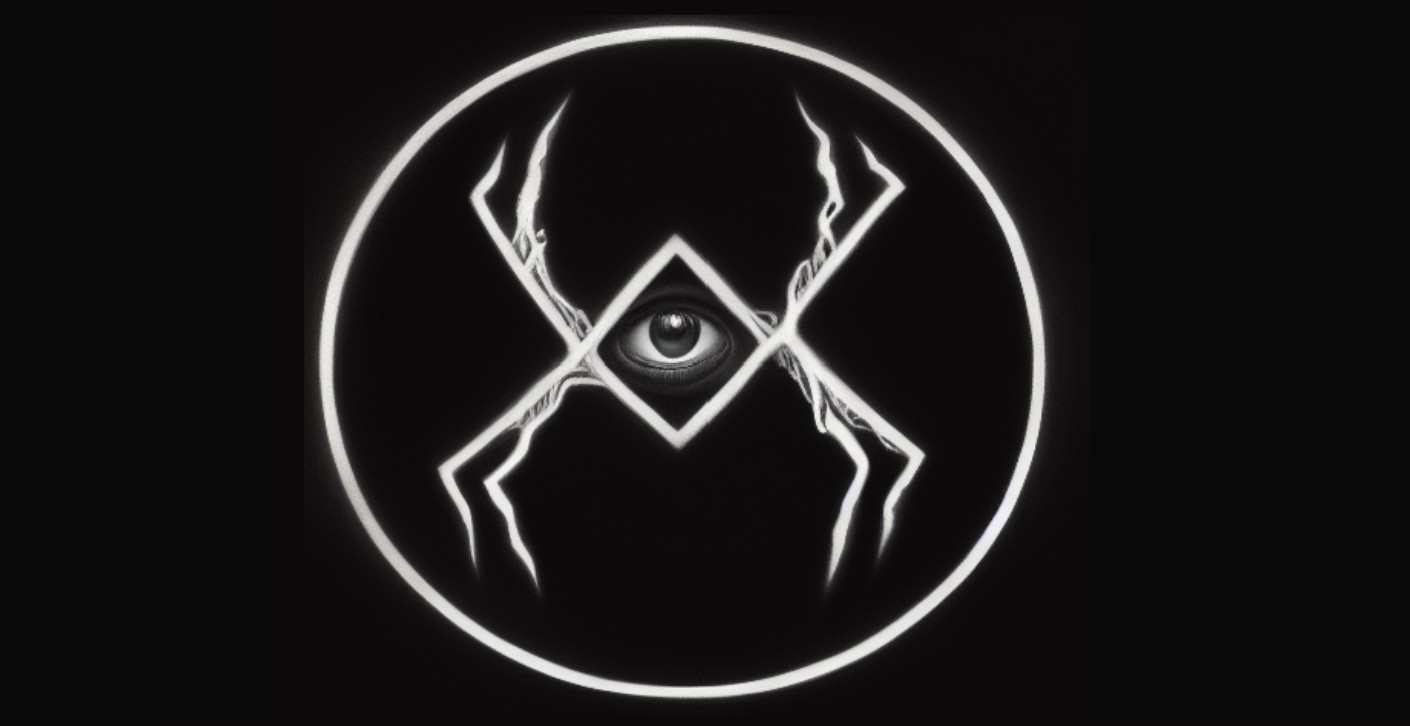
Galdrux is an online phenomenon based around a website that began publishing in 2020. (While galdrux.com was registered much earlier, it seems to have come into the hands of the current administrators around this time.) Galdrux presents itself as a “multiversal cult” centered on a spider-eyed chaos deity of the same name. Originating as a web-based collective, the project describes itself as a network of tricksters, artists, and occultists seeking to blur the distinction between reality and fiction.
The movement’s stated purpose is to create a “new aeon” through unfiction, technomysticism, artificial intelligence, and virtual reality technology. Its broader objective is to develop an international network of self-described cults connected through a shared collective thoughtform, or egregore, with the aim of challenging consensus reality.
The central mythology of the project revolves around the “Eye of Galdrux,” a spider-like entity depicted as existing at the center of a web representing a multiverse of human consciousness. Within the project’s lore, the internet is portrayed as a digital expression of informational chaos through which the deity’s influence spreads.
Another major symbol is the “Tower of Galdrux,” which is described as an instrument intended to mark the entity’s eventual cosmic dominance and achieve a “mass assimilation of minds.” The project’s writings draw from chaos magic traditions, Discordian subcultures, and internet meme culture, incorporating concepts such as the numerological “Game 23” and a memetic concept called “Virus 23.”
Although presented through fictional and occult themes, the project incorporates elements from historical and philosophical traditions. Associated texts compare Galdrux to concepts such as the Kabbalistic Ein Sof, the Hindu concept of Neti-Neti, Buddhist emptiness, and the Gnostic Pleroma, describing the entity as an ineffable and ultimate source of reality.
The project’s liturgical writings include manifestos attributed to figures such as “Chaos Lord Galdruzath” and “Baobab,” which describe a collapse between madness and reason. These texts also introduce ideas of an “aristocratic elite” that would oversee an eventual state of cosmic disorder in which all minds become assimilated.
The project’s use of cult-related themes has led to discussion over whether Galdrux represents an actual organization or an elaborate fictional project. Outside observers and internet commentators have identified elements commonly associated with cult recruitment, including references to mind control, psychological assimilation, and expectations of loyalty among followers.
At the same time, commentators have noted similarities between Galdrux and alternate reality games (ARGs) or collaborative fiction projects such as the SCP Foundation. The project’s own materials intentionally preserve this uncertainty, using conflicting statements that describe the work as fiction while also questioning whether it will remain fictional.
Observers generally characterize Galdrux not as a verified religious movement with established leadership, physical branches, or a documented membership structure, but as a collaborative Internet fiction project that incorporates occult imagery, cult symbolism, and questions about the relationship between fiction and reality as central elements of its concept.
Key Source:
Galdrux. (2020). The Galdrux Temple.