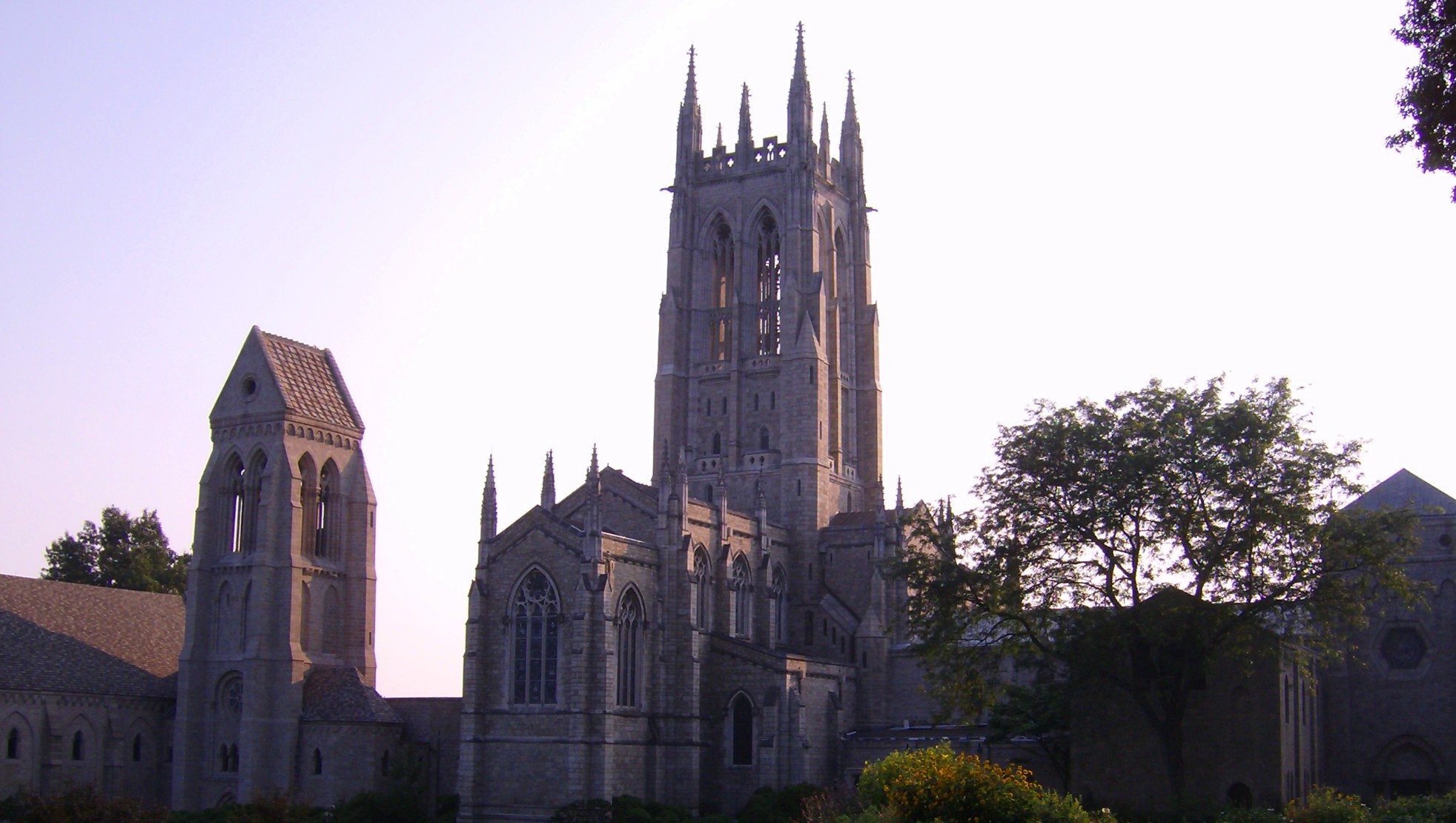
The General Church of the New Jerusalem, commonly known as the General Church or New Church, is an international Christian denomination headquartered in Bryn Athyn, Pennsylvania. Its theology is based on the writings of Emanuel Swedenborg, an 18th-century Swedish scientist, philosopher, and theologian.
Swedenborg never founded a formal church himself. He left behind 20 volumes of theological works in Latin, which were translated and circulated after his death in 1772, eventually inspiring a movement Robert Hindmarsh formally organized in London in 1787. The teachings reached the United States soon after, and in 1817 American adherents founded the General Convention of the New Jerusalem in Philadelphia, laying the institutional groundwork for the broader New Church movement.
The General Church split from this movement in 1890 and was formally organized in 1897 under William Benade, who championed the supreme authority of Swedenborg’s writings and a distinct priesthood built around them. Headquartered around the Bryn Athyn Cathedral, it developed as a smaller, more theologically conservative branch of the older General Convention. Membership grew modestly, from about 2,000 in the mid-20th century to roughly 6,760 in 2006, with affiliated congregations later established in Europe, Africa, Australia, and Latin America.
Central to General Church theology are Swedenborg’s theological works, known to adherents as “the Writings” or the “Heavenly Doctrine,” which the church holds to be a divinely revealed continuation of Scripture — the Word of the Lord’s Second Coming. Members believe Jesus Christ authored the Writings through Swedenborg as a prepared instrument, and so understand the General Church not as merely another denomination but as a restoration of original Christianity.
Its Christology is non-Trinitarian, teaching that God is a single divine person, Jesus Christ, with a Divine Soul, Mind, and Body, who took human form to redeem humanity by conquering temptation during his earthly life. The broader theology stresses free will and moral responsibility: salvation is open to anyone who genuinely loves God and neighbor, and those in Hell are understood to have chosen that state themselves. The church also teaches that angels and devils were once human and holds to the doctrine of conjugial love — that spiritual marriage between a man and woman continues eternally in heaven.
Worship is liturgical, centered on baptism and the Lord’s Supper, and the church observes New Church Day each June 19 alongside traditional Christian holidays. Governance is episcopal, with a line of executive bishops beginning with William Frederic Pendleton in 1897 and continuing today under Bishop Peter Martin Buss Jr. Education is a major institutional focus, concentrated in Bryn Athyn but extending internationally, including elementary programs, the Academy of the New Church secondary schools, Bryn Athyn College and the Academy of the New Church Theological School.
Alongside these formal institutions, the General Church has drawn criticism over what former members and outside observers describe as a high-control, insular community culture — dynamics some critical accounts have called cultlike. Former members educated in the church’s private schools describe an environment where socializing outside the church was strongly discouraged, within a patriarchal hierarchy that kept women in subordinate roles. Some former adherents say leaders selectively interpreted Swedenborgian and biblical teachings to reinforce female submission and extend institutional control over members’ personal lives.
Others who left have described having to unlearn internalized teachings about female self-worth, sexuality and sin, with some saying the social environment shaped their understanding of what a healthy adult relationship looks like. Critics of the contemporary church have also characterized its current culture as patriarchal and anti-LGBTQ, arguing these stances reflect present-day leadership choices rather than requirements inherent to Swedenborg’s original writings.
Key Sources:
Block, M. (1932). The New Church in the New World.
Wunsch, W. (1926). An Outline of New Church Teaching.