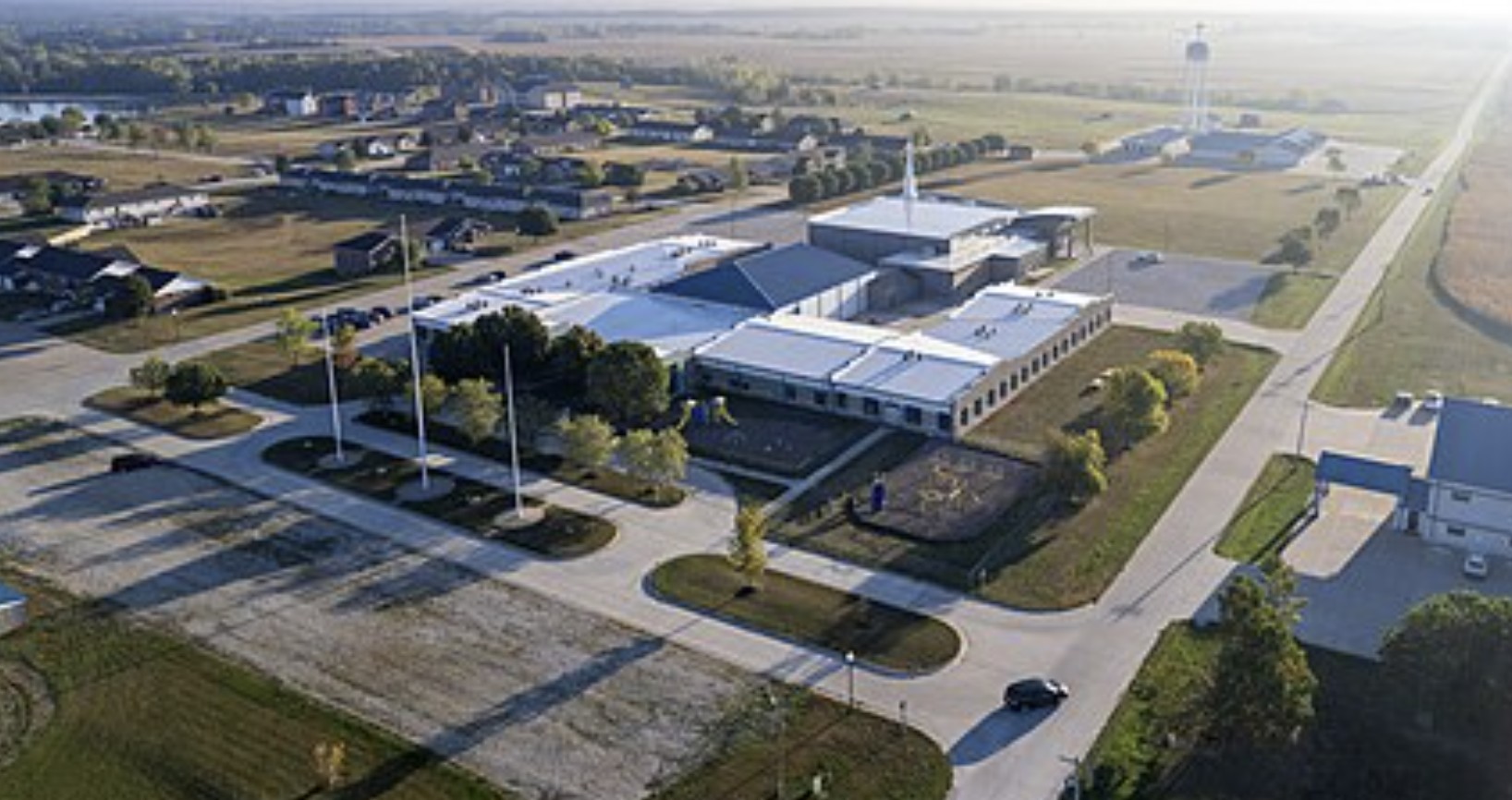
Heartland Christian Academy is an unlicensed private Christian boarding school and religious ministry complex in Shelby County, Missouri, founded in 1995 by Charles Sharpe. Sharpe, a wealthy businessman who built his fortune by establishing the Ozark National Life Insurance Company, developed the academy as part of a multi-thousand-acre religious compound known as Heartland. The compound operates through the Heartland Academy Community Church and CNS International Ministries.
The institution was established to rehabilitate troubled youth and adults through a program that combined Christian instruction with work therapy. The work program included labor on the property’s commercial dairy farm, which became a central part of the academy’s operations.
During its early years, Heartland faced allegations concerning its disciplinary practices and isolation of students. These allegations included the withdrawal of prescribed medications from enrolled youth, extended periods of enforced silence, monitored communications and corporal punishment.
The academy first came under broader public and law enforcement scrutiny in the summer of 2001. Local authorities investigated an incident in which staff members forced 11 teenage students to stand in dairy manure pits as punishment for minor behavioral infractions. Some students were reportedly submerged up to their chests.
Sharpe defended the practice as routine agricultural work and referred to it as “school appreciation day.” He also alleged that state officials were motivated by anti-religious bias. Several staff members were later charged with child abuse in connection with the manure pit incidents and separate physical beatings. All were ultimately acquitted or had their charges dropped.
Relations between Heartland and state authorities deteriorated further later that year. On October 30, 2001, law enforcement officers, juvenile officers and child welfare officials carried out a large-scale raid on the Heartland campus after investigating a staff member who allegedly injured a student’s eardrum during a physical altercation.
During the operation, authorities forcibly removed roughly 120 minor students from the compound and placed them in temporary state protective custody. Heartland’s leadership responded by filing a civil rights lawsuit against county officials and state juvenile officers.
The ensuing legal disputes brought greater attention to allegations about the compound’s isolated and highly controlled environment. In court documents and public statements, local law enforcement and child welfare officials described Heartland using terms such as a “cult” and a “little Waco.” Officials pointed to Sharpe’s centralized authority, the physical isolation of the 20,000-acre complex and what they described as pressure on adherents to cut ties with outside influences.
In 2004, a U.S. District Court judge ruled in Heartland’s favor, finding that state juvenile officers had violated the ministry’s constitutional rights during the 2001 raid. The court determined that state officials had acted with hostility toward the faith-based facility. The ruling led to an $800,000 legal settlement that the state of Missouri paid to Heartland in 2005. A separate federal lawsuit concerning the removal of students remained in litigation until it concluded in 2010.
Missouri later revisited regulations governing religious boarding schools. In 2021, the state passed legislation intended to apply health, safety and background-check requirements to religious boarding schools that had previously been exempt from those rules.
Key Sources:
The Associated Press. (2006, June 13). Christian reform school sues Mo. workers.
Bragg, R. (2001, July 5). Christian school questioned over discipline for wayward. The New York Times.
Darr, B. (2001, October 31). Students removed from Heartland. The Hannibal Courier-Post.
The Hannibal Courier-Post. (2001, November 1). Heartland director, set to accept award, learns of facility’s raid instead.