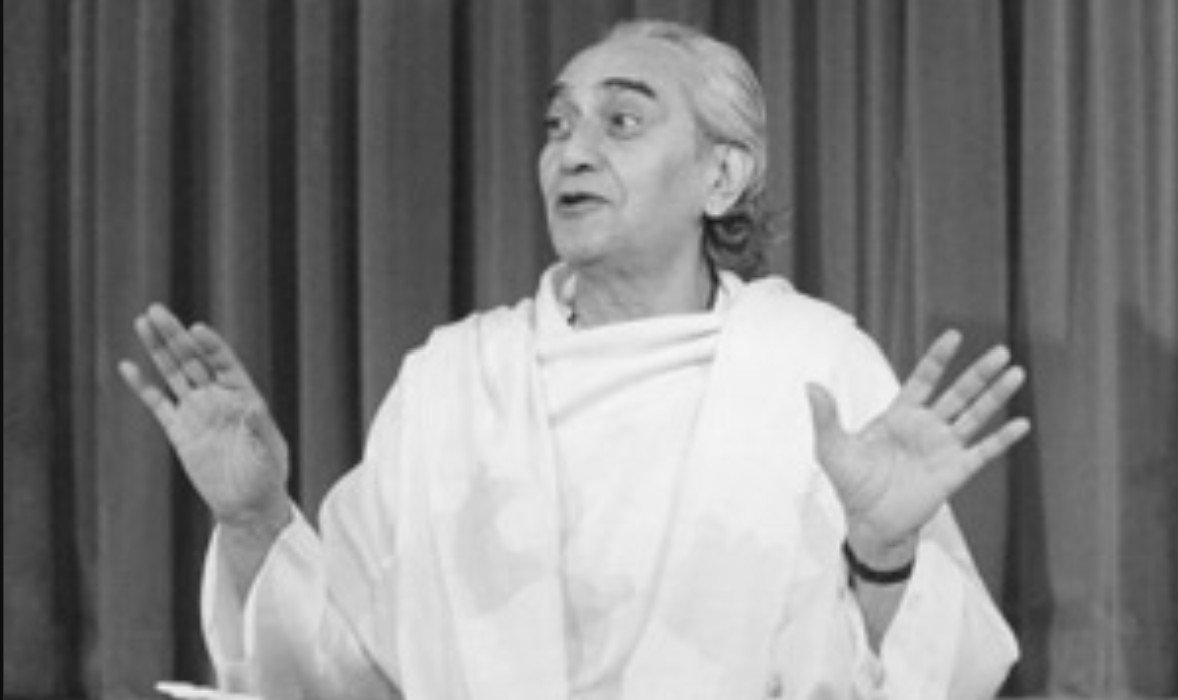
The Himalayan Institute of Yoga Science and Philosophy is an international nonprofit organization founded in 1971 by Brij Kishore Dhasmana, who later took the name Swami Rama. The organization promotes holistic health, yoga instruction, and humanitarian projects, with its primary residential campus located in the Pocono Mountains of northeastern Pennsylvania. Swami Rama also faced allegations of sexual abuse spanning several decades and locations, which culminated in a $1.9 million civil judgment awarded to a former student in 1997.
Swami Rama was born in 1925 in northern India. His official biography stated that he had been raised in Himalayan monasteries under the guidance of a personal guru, served as a Shankaracharya and earned multiple academic degrees from institutions in Europe and India. However, former followers and cult-awareness organizations later found that portions of these biographical claims had been fabricated.
In 1969, Swami Rama emigrated to the United States, where he began teaching yoga and meditation. He founded the Himalayan Institute in Illinois in 1971 and later purchased a former Catholic seminary in Honesdale, Pennsylvania, in 1977. The property became the organization’s headquarters and residential center as its activities expanded.
During the 1970s, the Institute established approximately 25 branches and developed residential programs, teacher training and holistic health services. Swami Rama also attracted scientific and media attention through biofeedback experiments conducted at the Menninger Foundation in the early part of the decade. Researchers documented his apparent ability to voluntarily alter brain-wave patterns, regulate his heart rate and control his body temperature. These demonstrations contributed to his public profile and attracted followers, including people from professional and academic backgrounds interested in yoga and meditation.
As the organization grew, questions arose about its internal structure and the authority exercised by its founder. Former residents described an environment involving behavioral monitoring, restrictions on personal relationships and substantial demands for unpaid labor. According to former members, disciples were expected to obey Swami Rama, whose status as an enlightened guru led some followers to regard his decisions as beyond ordinary moral scrutiny and his instructions as infallible.
Allegations of sexual misconduct against Swami Rama emerged as early as the 1970s. Over the following years, former students reported sexual exploitation and described difficulties challenging the guru’s authority. Some alleged that the Institute’s leadership and inner circle discouraged complaints, minimized allegations and presented the guru’s actions as forms of spiritual teaching. Former members also described psychological coercion, intimidation and isolation when they questioned the leadership or attempted to leave the community. In 1997, a former student won a $1.9 million civil judgment against Swami Rama for multiple sexual assaults.
The Himalayan Institute continued its educational, publishing and humanitarian activities following these controversies. It maintained its focus on yoga, meditation and holistic health, while the allegations against Swami Rama and accounts of the organization’s internal practices remained part of its history.
Key Sources:
Rose, J. (2022, January 5). Yoga Abuse or the Abuse of Yoga? Elephant Journal.
Tigunait, R. (2001). At the Eleventh Hour: The biography of Swami Rama. Himalayan Institute Press.
Webster, K. (1990, December 1). The Case against Swami Rama of the Himalayas. Yoga Journal.